
Turku University of Applied Sciences was accepted into the global Planetary Health Alliance in November 2025, following its successful international collaboration in the TEACH project. The megacity of Jakarta faces different public health challenges than Turku, but both cities benefit from collaboration in development.

Julkaistu:
Muokattu:
Text: Antti Rönkä
”Planetary health means understanding how we, as human beings, are entirely dependent on the health of our environment and our planet”, says Hanna Audila.
Audila participated in the international TEACH project, which focused on planetary health and was co-led by the University of Indonesia—the country’s oldest and most prestigious university—in collaboration with Turku UAS from 2023 to 2025. She graduated with a degree in epidemiology in September 2025 and currently works as a programme manager.
Seven students from Finland and six from Indonesia participated in the project. The goal of the project was to enhance the understanding of social and healthcare professionals regarding planetary health.
Ni Luh Arum was another participant in the group of Indonesian students. She graduated in autumn 2025 with a major in public health. Today, she works at a government ministry focused on improving living conditions in rural and underdeveloped areas of Indonesia.
”We work to improve basic needs like access to clean water, food systems, and sanitation facilities”, Arum explains.
In Indonesia, climate change is already evident in rising temperatures and more frequent extreme weather events, such as severe storms.
Health centres serve as hubs for communication
”Understanding planetary health helps us see the connections between environmental conditions and social well-being”, Arum sums up.
Arum lives in Indonesia’s capital, Jakarta, while Audila resides in the nearby city of Depok, home to about two million people.
”Especially in urban areas, environmental awareness has increased”, says Arum.
”But in rural regions, people mostly focus on everyday necessities. That’s why it’s important to strengthen education and communication, so people can see how environmental changes affect daily life. There’s still work to do in the system”.
Audila believes that health centres could serve as local hubs for both connection and communication:
Health centres reach people from different regions and cultures. They could play a key role in raising awareness of planetary health among Indonesians.
Admiring Finland’s waste management
One of the most pressing environmental challenges in Indonesia, according to Audila, is waste management. During her visit to Finland, she was impressed by how efficiently waste and recycling are handled.
”In Indonesia, hardly anything is recycled. Some people try to sort their waste, but in the end, it all ends up in the same place”, she says.
”In Finland, we heard that up to 98% of waste is recycled. That’s astonishing!”
Ni Luh Arum points out that systems are built not only by policymakers but also by people’s everyday values:
”It’s not just about politics or structures. It’s about what people value and how they make choices every day. It was eye-opening to see the respect Finns show towards these issues”.
In addition to waste management, Audila is also concerned about antibiotic-resistant bacteria.
Antibiotics are often used too easily. In Indonesia, a prescription is technically required, but some pharmacies still sell them without one.
The TEACH project broadened horizons
The most rewarding part of the two-year TEACH project was the chance to meet new people and learn about different cultures.
”We met so many wonderful people”, Audila and Arum recall, smiling.
In April 2024, they visited Turku and Helsinki for a two-week study trip. Besides the natural beauty, they remember Finland’s non-hierarchical culture.
”Students and professors were seen as equals”, Arum says.
”It expanded our understanding of how we can think and work together”.
They also saw snow for the first time in their lives.
”We were told there wouldn’t be any snow in April, but we saw it both in Turku and Helsinki!”
Integrating planetary health into social and healthcare education
Following the TEACH project, funded by the Finnish National Agency for Education, Turku UAS will be the first Finnish university of applied sciences to integrate planetary health into its social and healthcare Master School curriculum.
This collaboration with Indonesia and the new curriculum content led to Turku UAS being accepted into the Planetary Health Alliance, a global network of universities, researchers, and organisations working toward a healthier, more sustainable future.
Planetary health is a concept developed in the 2010s that examines the interdependence between human health and the well-being of the planet.
”Public health has always evolved with time”, says Tuuli Lahti, degree programme leader of Turku UAS Health and Well-being Master School programmes.
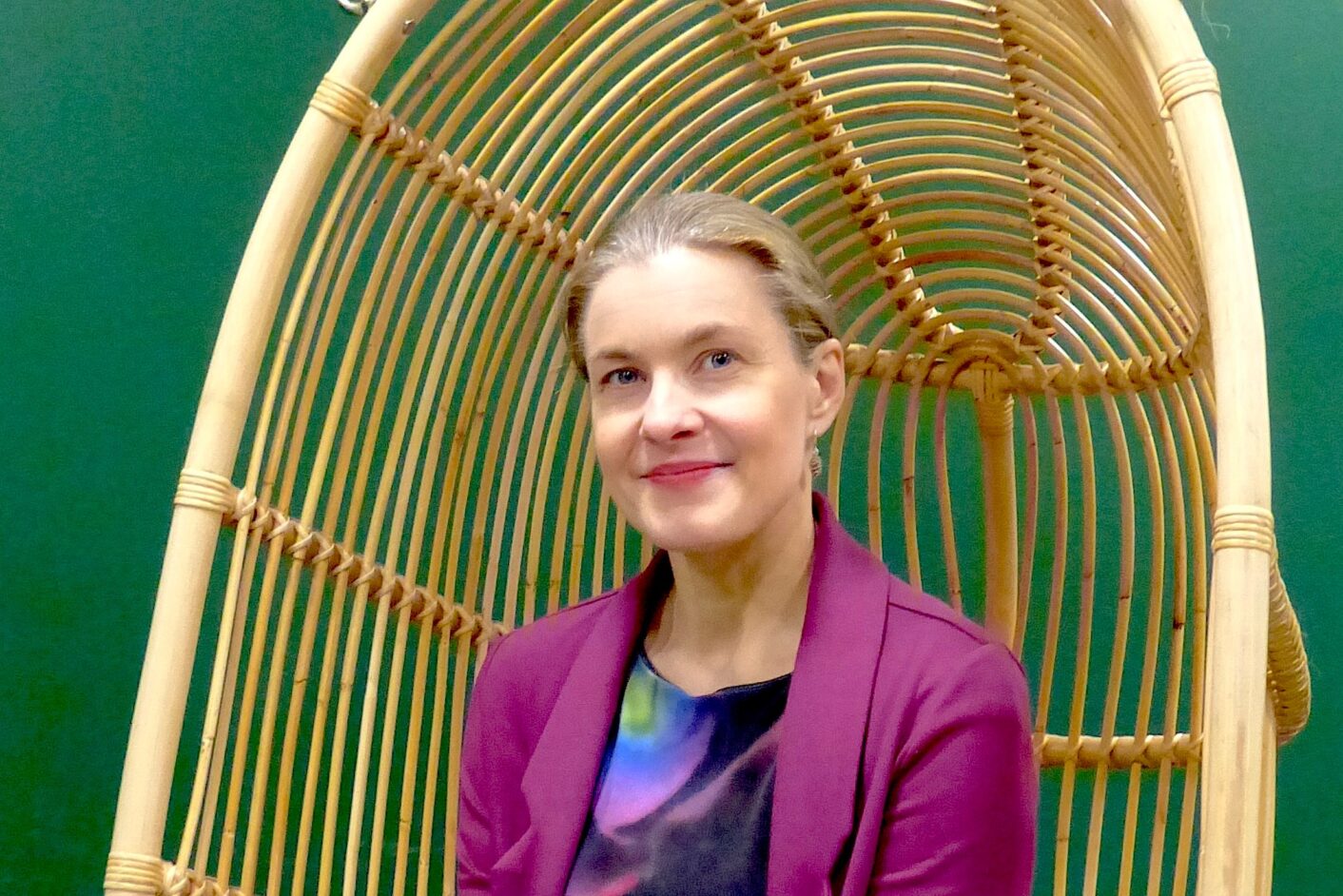
Once, the focus was on infection prevention and hand hygiene. Later, we began to understand the importance of the social environment and economic factors. Now, our understanding has expanded to include the entire planet.
Tuuli Lahti
Principal lecturer, degree programme leader
See also:
Read next
-
News
University of Turku and Turku University of Applied Sciences develop new model for higher education community
The University of Turku and Turku University of Applied Sciences signed a strategic partnership agreement. The aim is to develop a new model for a higher education community that…
-
Press Release

15 274 applicants to Turku University of Applied Sciences in the spring’s joint application
The second joint spring application for applications for higher education institutions ended 24 March. Turku University of Applied Sciences was the third largest of all Finnish universities of…
-
Press Release

Turku University of Applied Sciences receives Finland’s Most Inspiring Workplaces award
Turku University of Applied Sciences has been awarded the prestigious Most Inspiring Workplaces in Finland award as part of a national HR survey conducted by Eezy Flow. Published:…