
Ahti-Sampo – Valorization of fish products with novel food technology
Project Duration
Source of Funding
European Regional Development Fund (ERDF)

Total Funding
€240,842
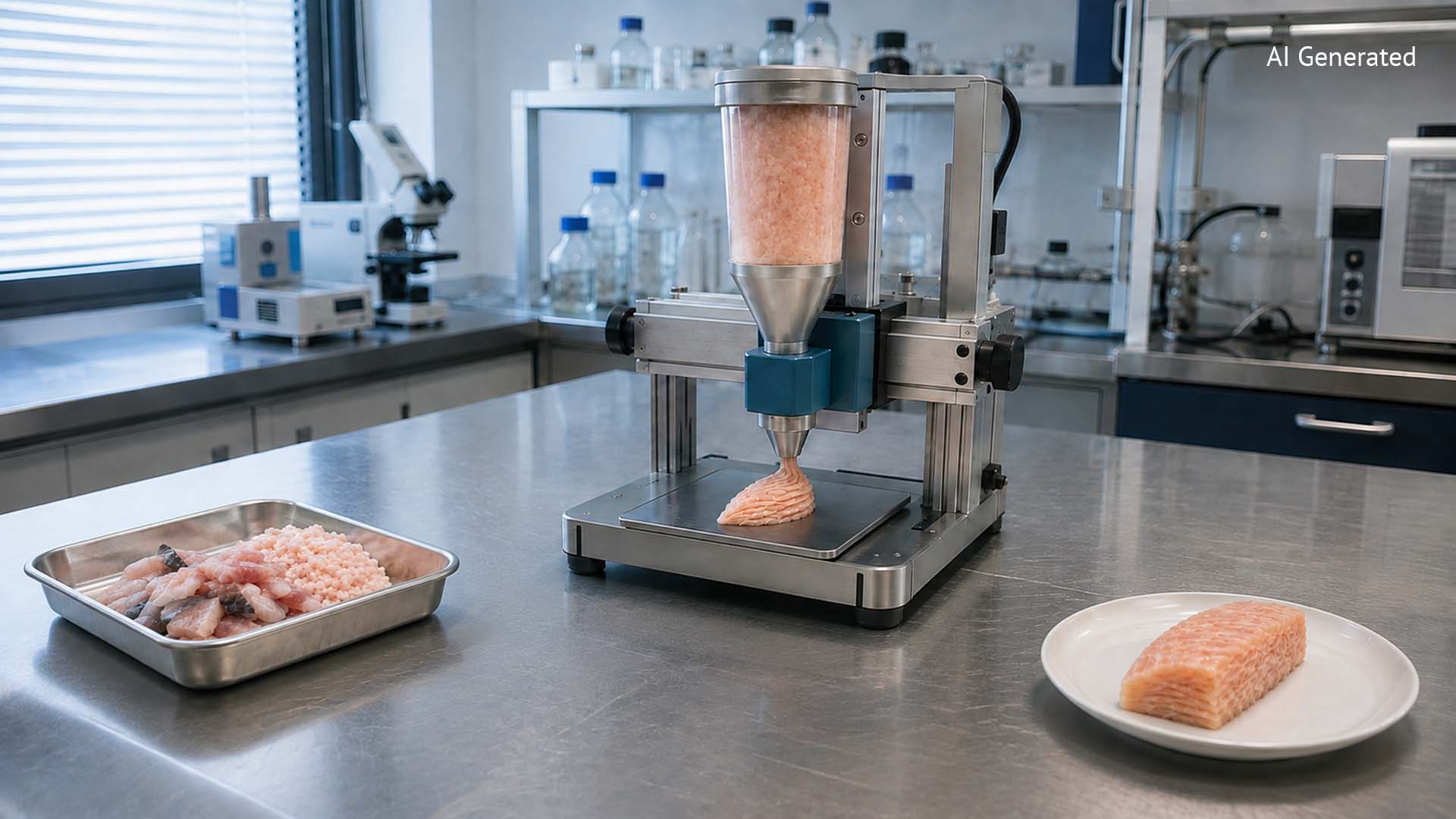
In Ahti-Sampo, we develop new ways to use fish-processing side streams and underutilised fish raw materials as food. We combine food 3D printing with cold extrusion to create fish products with attractive structures and recognisable shapes from paste-like raw materials. The project maps suitable raw materials, adapts printing equipment for food applications, and develops and pilots model products. The results will help food-sector SMEs assess how the technology could be used in their own production.
Creating value from Finnish fish resources
Fish filleting and other food-processing operations generate side streams that contain nutritionally valuable raw materials suitable for food use. However, small, variable and geographically dispersed batches are often directed to feed or energy production. Small and medium-sized enterprises in particular lack access to technologies and pilot environments where paste-like raw materials can be developed into recognisable and commercially attractive foods.
Ahti-Sampo addresses this need by piloting and validating food 3D printing for restructuring these raw materials. The fish-based paste is extruded layer by layer into a pre-designed shape at a low temperature. The aim is to create products that look and taste like fish and have structures suitable for consumers, professional kitchens and further development by companies.
What we do
The main focus is on fish-processing side streams and underutilised fish raw materials. We also consider how the method could be applied to other paste-like side streams from food processing.
In the project, we:
- map the availability of regional side streams and assess the technical and qualitative properties of selected raw materials
- determine the pre-treatment and formulation adjustments required before printing
- test printability, processing parameters, shape retention, product structure and sensory properties
- develop and pilot at least three model products together with possible applications and recipes
- present the technology and model products to companies, professional kitchens and other stakeholders through workshops and demonstrations
Results for companies and other users
The project will generate practically tested information on raw materials, pre-treatment, printing parameters and the technical configuration of the equipment. We will also assess technology readiness, scalability, capacity, investment needs and suitability for commercial production. The findings will be compiled into an openly available utilisation pathway that companies can use to evaluate the technology without having to begin the underlying applied research from scratch.
The results will be communicated through an open report, a scientific article, a professional publication and workshops. They will also be presented to companies and networks in the food and fisheries sectors.
Who the project is for
The main target groups are fish processors and fish retailers, other food-sector SMEs, companies that use food side streams, and professional kitchens and food services. Technology and equipment suppliers, development organisations, educational institutions and students will also take part in the cooperation. Feedback from companies and other users will guide the development of the model products, demonstrations and the technology-utilisation pathway.
The New Materials and Processes research group at Turku University of Applied Sciences implements the project from 1 August 2026 to 31 July 2028. The project is funded by the European Regional Development Fund (ERDF).

Contact Us

Learn more about the research group
-
Research Groups
New materials and processes
See all our projects
We carry out nearly 200 RDI projects annually together with working life and our international partner networks.