
Early Detection of Extreme Engine Events (EDE3)
Duration of the project
Source of funding
Business Finland
Total funding
1 029 998 €
The EDE3 (Early Detection of Extreme Engine Events) project aims to develop a comprehensive framework for the early detection, prediction, and prevention of severe engine failures with focus on large internal combustion engines. Led by Turku University of Applied Sciences in close collaboration with industry partners, EDE3 combines high‑frequency monitoring, advanced simulation models, and real‑time data analysis to significantly improve engine reliability and safety in heavy machinery applications.
The EDE3 project seeks to develop a framework for real-time identification, prediction, and prevention of catastrophic failures in large mechanical engines, particularly internal combustion engines. This work is led by the Computational Engineering and Analysis (COMEA) Research Group and the Power and Engine Research Group at Turku University of Applied Sciences and carried outin collaboration with industry partners such as Wärtsilä, AGCO Power, Nome, Unikie, and EDR&Medeso. The project integrates high-frequency monitoring, advanced fault-simulation modeling, and adaptive signal processing. EDE3 is a Business Finland Co-Research project and contributes to Wärtsilä’s Energy Business and the WISE Veturi Project strengthening cooperation between research and industry.
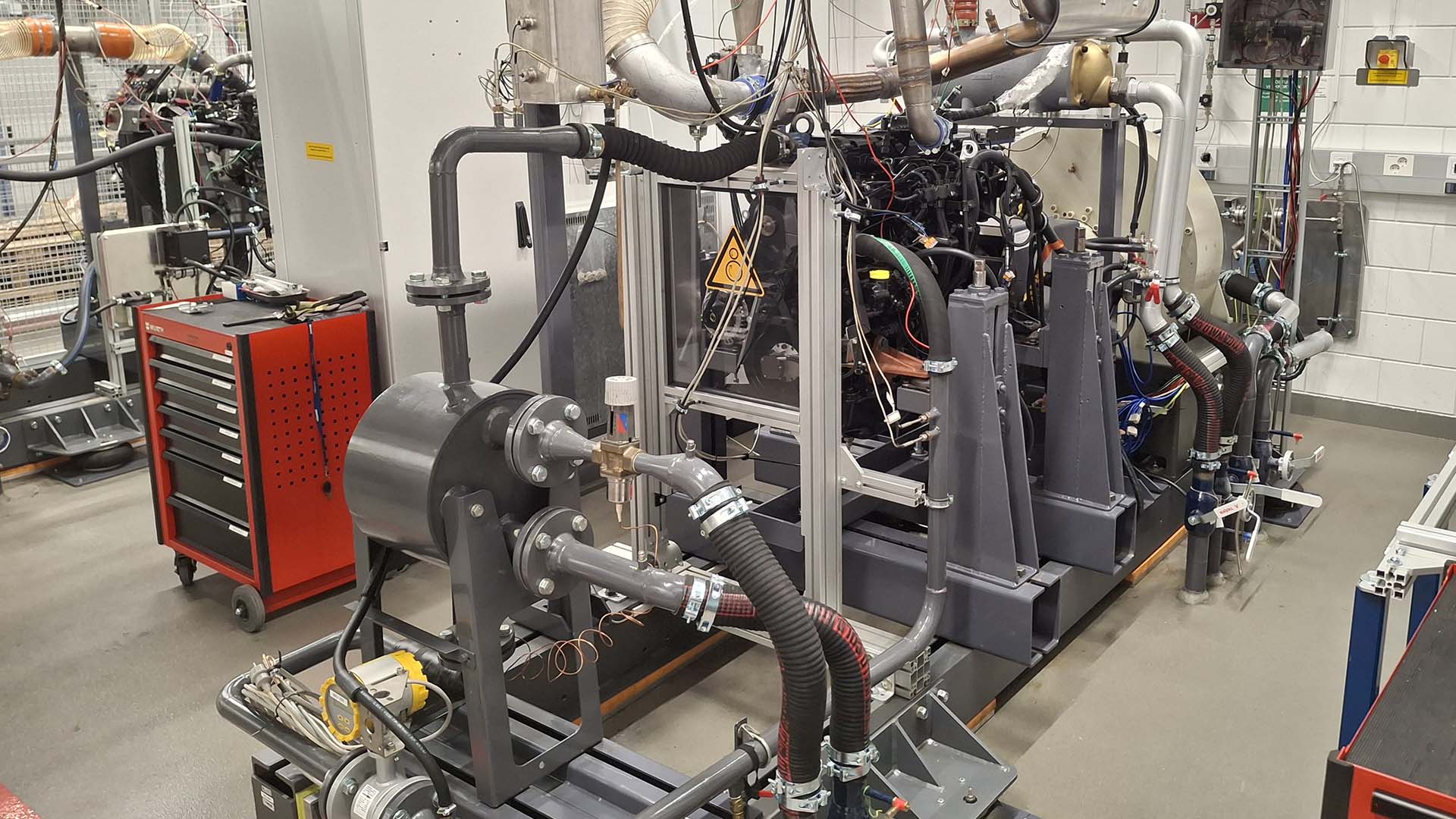
The EDE3 approach combines experimental engine testing, physics-based modeling, and real-time data analysis to detect engine faults earlier and with greater accuracy than existing systems.
The project is structured into four main work packages:
- experimental engine testing,
- model development,
- process development (scaling solutions to larger engines and new technologies), and
- project management.
Notably, the project leverages destructive engine testing to generate rare failure data, which is essential for validating new predictive diagnostics models.
The methods and frameworks developed are designed to be broadly applicable across various heavy machinery
The anticipated outcomes of EDE3 include enhanced engine reliability, reduced operational risks, improved maintenance practices, and the creation of commercial solutions for predictive diagnostics. The methods and frameworks developed are designed to be broadly applicable across various heavy machinery, positioning the Finnish consortium at the forefront of industrial reliability engineering.

-
Press Release

Turku University of Applied Sciences research project predicts serious engine failures leading to breakdown
Turku University of Applied Sciences, together with industry partners, has launched the Early Detection of Extreme Engine Events (EDE3) research project, which aims at early detection, prediction and prevention of severe engine failures in large engines. Engine failures can cause long downtimes, high costs and safety risks. The EDE3 project aims to address these challenges by developing a real-time system that identifies and predicts potential engine problems before they occur.
Contact us



Partners
- Wärtsilä Finland
- EDR & Medeso Oy
- AGCO Power Oy
- Unikie Oy
- Nome Oy
Meet the research team
-
Research teams
Computational Engineering and Analysis
-
Research teams
Engine and Powertrain
See all our projects
We carry out nearly 200 RDI projects annually together with working life and our international partner networks.