I smell fish – Blue products 3.0
Duration of the project
Source of funding
Euroopan meri-, kalatalous – ja vesiviljelyrahasto
Total funding
1 300 000 €
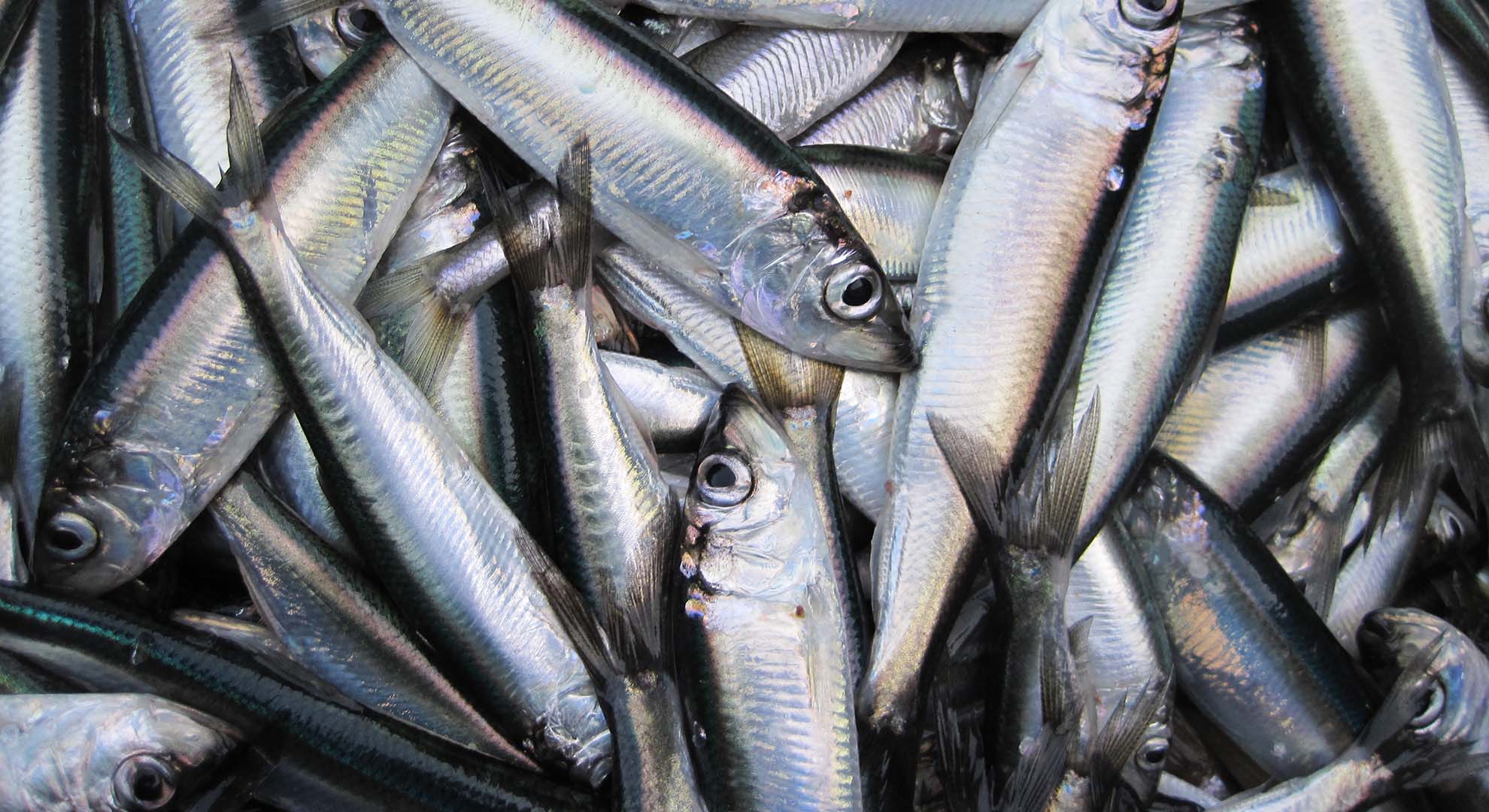
Fish and all its parts, including scales, skin, head, bones, and internal organs, has potential as raw material for various products. The Blue Products 3.0 innovation programme is now investing in the development of new processes and products to unlock the unused potential of Baltic herring, other low-value fish species, and side streams. The goal is to utilize the entire fish for the production of higher-value products, thereby improving the profitability of the sector.
The collaboration network established in previous programme years between researchers in food technology and consumer research provides a strong foundation for continuing new work. As a result of this research collaboration, new knowledge has emerged about potential new products and production technologies, which have been transferred to companies. High-quality pulled fish made from unprocessed small fish previously attracted interest from companies, the media, and the public. The development of new marination and fermentation methods led to tasty new fish products. Gelatin made from fish scales was odorless and tasteless. Promising results were also obtained regarding the suitability of fish skin and heads for protein production.
The general objective of the Blue Products 3.0 programme is to increase the use of the most important identified and underutilized fish species—especially Baltic herring, but also vendace, smelt, and cyprinids—as food or value-added products, including side streams from the fish processing industry.
The programme has four focus areas:
- Improving fish quality throughout the value chain,
- Promoting fish product development and new production methods,
- Accelerating the commercialization of fish value fractions,
- Developing network-based collaboration.
The BP 3.0 programme supports the goals of the National Fish Promotion Programme, which aims to double the use of domestic fish and increase the value of domestic production.
The project implementation period is March 7, 2023 – June 30, 2026. Turku UAS participates as a co-implementer from August 1, 2025 to February 28, 2026.
Contact us


Partners
- Aktion Österbotten (administrator)
- South-Eastern Finland University of Applied Sciences
- Natural Resources Institute Finland
- Metropolia University of Applied Sciences
- VTT Technical Research Centre of Finland Ltd
- Turku University of Applied Sciences
- University of Turku
- The Ostrobothnian Fisheries Association (coordinator)
Meet the research team
-
Research teams
New materials and processes
See all our projects
We carry out nearly 200 RDI projects annually together with working life and our international partner networks.