
Improving the removal of PFAS and AMR at the Kakolanmäki wastewater treatment plant (PATe)
Duration of the project
Source of funding
Ahti Programme of the Ministry of the Environment
Total funding
160 000 €
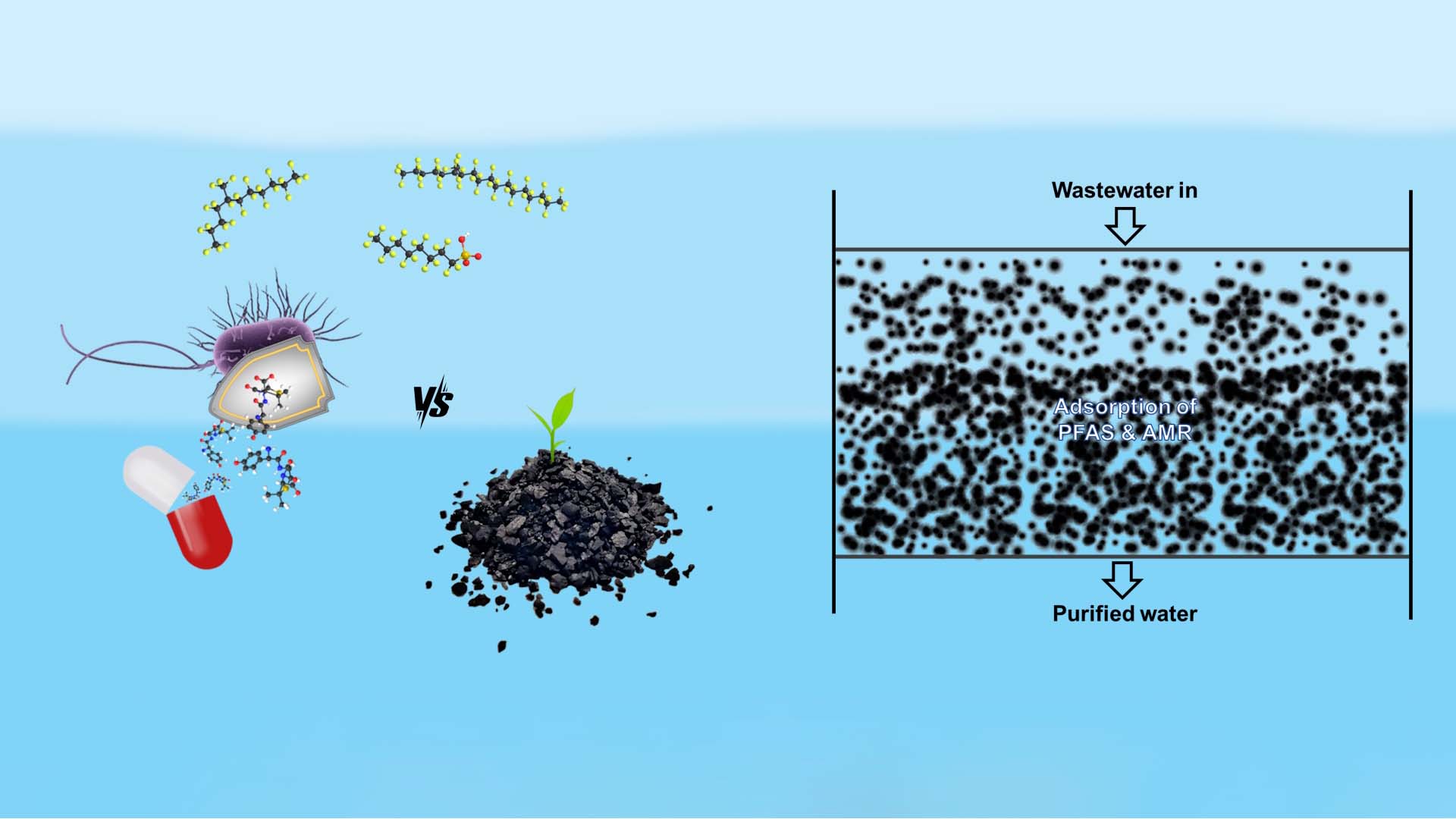
Our goal is to enhance the removal of PFAS compounds from wastewater at the Kakolanmäki treatment plant in Turku, and to examine the occurrence and removal of antimicrobial resistance (AMR) genes during the treatment process.
PFAS Compounds and Antimicrobial Resistance (AMR)
Per- and polyfluoroalkyl substances (PFAS) are a group of human-made chemicals. Due to their durability and water and grease repellent properties, they have been widely used in various consumer products, industry, and professional applications—for example in frying pans, waterproof clothing, surface treatment agents, and firefighting foams.
AMR refers to the ability of a microbe to resist medicines developed to combat it. For instance, excessive use of antibiotics can cause bacteria to develop and spread genes that protect them from certain antibiotics. This, in turn, leads to reduced antibiotic effectiveness.
Activated Carbons for Wastewater Treatment
Due to their porous structure and chemical characteristics, activated carbons are particularly suitable for removing organic micropollutants such as PFAS compounds and pharmaceuticals from wastewater. Our previous studies indicate that activated carbon filtration could be a cost effective option for removing micropollutants from wastewater. However, the high carbon footprint of activated carbon produced from fossil raw materials raises concerns.
As a result, activated carbon made from biomaterials is hoped to offer a solution for removing harmful substances from wastewater with a significantly lower carbon footprint. This project aims to test the suitability of bio based activated carbons for removing both PFAS compounds and pharmaceuticals from wastewater.
Pilot Tests in Collaboration with Turun Seudun Puhdistamo Oy
Pilot tests will be conducted at the Kakolanmäki wastewater treatment plant using a pilot container developed in the EMPEREST project. The container includes two parallel activated carbon filtration units, enabling comparison of the removal performance of activated carbons made from different biomaterials. Wastewater samples will be taken at regular intervals before and after activated carbon filtration. The samples will be analyzed for PFAS concentrations and, periodically, for pharmaceuticals listed in the Urban Wastewater Treatment Directive (2024/3091). In addition, the quantity of AMR genes present in the wastewater will be analyzed both during the treatment process and after UV irradiation.
The pilot runs will continue until the purification efficiency of the carbons decreases. The results will help the Kakolanmäki wastewater treatment plant to plan future investments.
The project is carried out in collaboration between Turku University of Applied Sciences and Turun Seudun Puhdistamo. The University of Turku participates as a supporting partner.
The Ministry of the Environment has supported the project with 128 582 euro through the Ahti Programme. The objective of the Ahti Programme is to curb nutrient loading, improve the structure of arable lands, control harmful substances and recover resources and take them into use.


Contact us



Partners
- Turun Seudun Puhdistamo
- University of Turku
Meet the research team
-
Research teams
Water and Environmental Protection
See all our projects
We carry out nearly 200 RDI projects annually together with working life and our international partner networks.