
Air Conditioning Laboratory
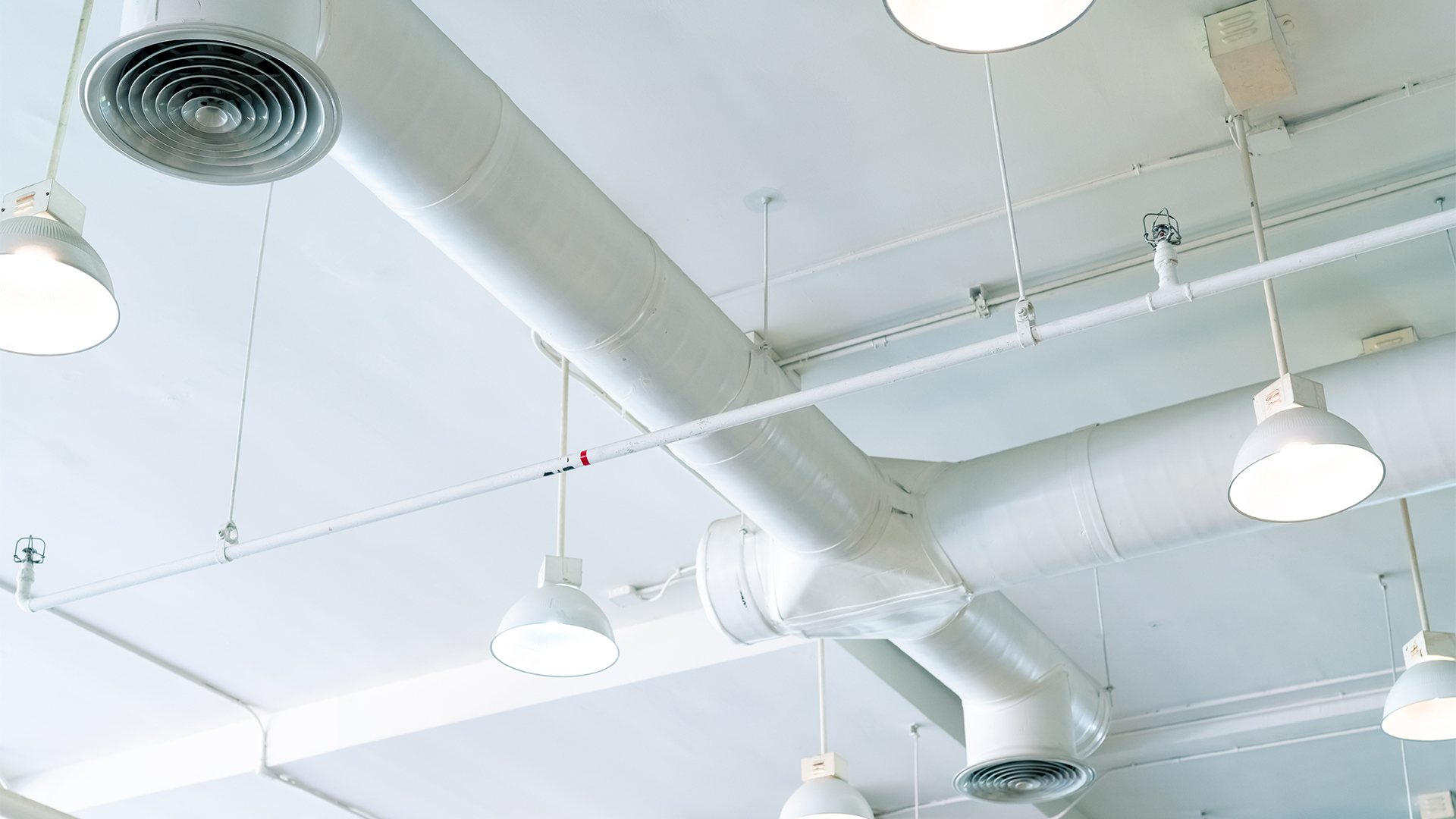
The Air Conditioning Laboratory investigates the effects of ventilation systems and air distribution methods on indoor environmental quality and building occupants. In addition to full-scale experimental studies, research methods include computational fluid dynamics (CFD) simulations and psychophysical experiments related to thermal environments and indoor air quality. We provide tailored services for companies and other organizations in the fields of ventilation, indoor climate and indoor environmental quality. In addition, the laboratory is used both for public-funded scientific research and for industrially funded research and development.
Indoor environment measurements
- Room air temperature
- Operative temperature
- Relative humidity
- Indoor carbon dioxide (CO₂) concentration
- Total volatile organic compounds (TVOC) concentration
- Air velocity
- Draught assessment using smoke visualization
- Occupant satisfaction and indoor environment surveys
The measurements can be carried out either in our laboratory facilities or at the customer’s premises.
Operation of the air conditioning system
- Supply and exhaust air temperature
- Sufficiency of supply air flows
- Thermal loads and sufficiency of cooling
Measurements of ventilation performance and indoor airflow conditions
- Air distribution performance and effectiveness
- Pollutant dispersion and occupant exposure
- Tracer gas measurements
- Smoke visualizations
- Air velocity field measurements with ultrasonic and omnidirectional sensors
Thermal comfort measurements using a thermal manikin
- Assessment of thermal comfort under different indoor environmental conditions
- Measurement of clothing thermal insulation
Our laboratory is equipped with a breathing thermal manikin that can be used to objectively assess thermal comfort under a wide range of environmental conditions. The measurements can be used to estimate how thermal conditions are likely to be perceived by occupants on average. For example, thermal manikin measurements can be used to compare different air distribution methods and identify the solution that provides the best thermal comfort. Detailed data on local thermal conditions of different body parts can be utilized in the development and optimization of ventilation terminals, vehicle cabins, ship cabins, and other indoor environments
Modelling of ventilation and indoor environmental conditions
- We perform Computational Fluid Dynamics (CFD) simulations, in which complex airflow patterns are modelled using numerical methods. CFD simulations enable the prediction of airflow, thermal conditions, and indoor air quality resulting from different ventilation and heating solutions, thermal loads, and room layouts. The dispersion of carbon dioxide and other airborne pollutants can also be modelled when their emission sources are known.
- CFD modelling can be used to evaluate and optimize ventilation and heating systems before implementation. It helps predict the indoor environmental conditions created by different design solutions, thermal loads, and pollutant sources, enabling informed decision-making during product development and building design.
We also provide independent expert assessments, technical studies, and consulting services related to ventilation, indoor climate, and indoor environmental quality.
Contact us


Our high-quality RDI services are provided by experienced experts. Our customers include companies and other organizations of different sizes. Contact us to discuss the possibilities.
Location: The Air Conditioning Laboratory is located in Turku, Southwest Finland (Kupittaa Campus).
200 square meters of laboratory space
The Air Conditioning Laboratory has been operating on the Lemminkäisenkatu campus in Turku since 1987. From a national perspective, we have extensive and versatile laboratory facilities at our disposal. The laboratory has a full-scale mock-up of a simplified hospital isolation room and two full-scale cruise ship cabin mock-ups. The isolation room mock-up is built from cleanroom elements inside a larger laboratory space.
The air conditioning laboratory also serves as a learning environment for engineering students at Turku University of Applied Sciences.
Experts behind the services
In addition to the services offered to companies, extensive research is carried out in the laboratory. The information is used, among other things, in the development of regulations concerning the built environment and in international standardization. Learn more about the work of the Air, Sound and Perception research group.