
Troubleshooting, hardware building and machine learning – Capstone projects challenge students to solve practical challenges and act like professionals. At Capstone, students develop their technical skills alongside teamwork, relentless problem-solving and self-confidence.
Published:
Edited:
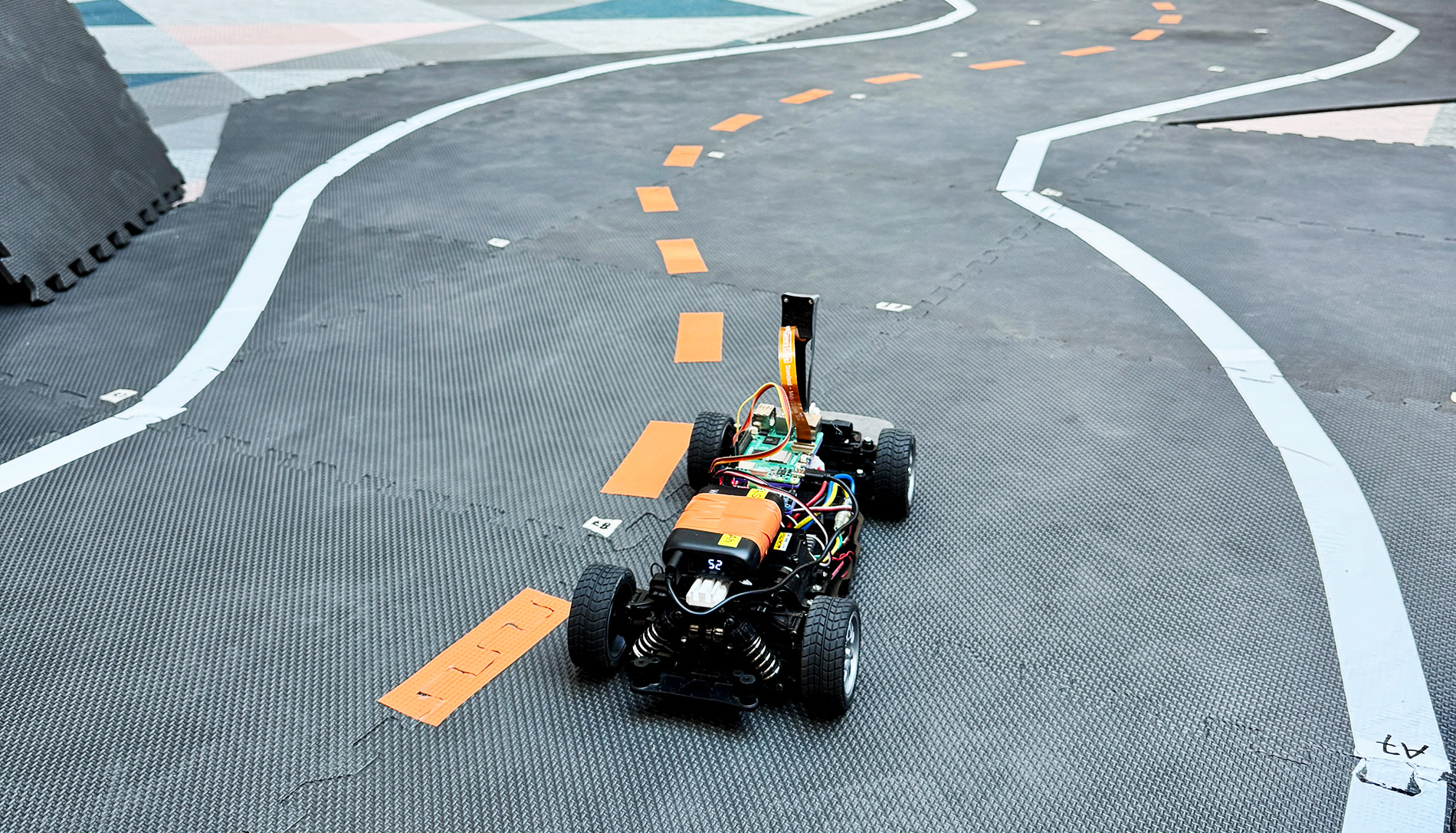
Autonomous racing car speeds around the track
An international team of third-year students developed a small autonomous racing car as part of their Capstone course, combining hardware upgrades with AI-based vision and control. For third-year students, this is a major achievement.
In the project, students updated and built new solutions on top of the basic platform. They replaced the camera and battery and solved compatibility problems between software versions and machine learning frameworks.
In a team of six, responsibilities were divided according to individual strengths. The team focused on embedded hardware. There was also plenty to do in terms of AI and software; coding the control stack, training models in the simulator, preparing training data and validating performance on the track.
“However, the most vital lesson was learning to solve problems as a team. When issues arose, we tackled them together until we found a way forward,” tells Antton Veijalainen from the project team.
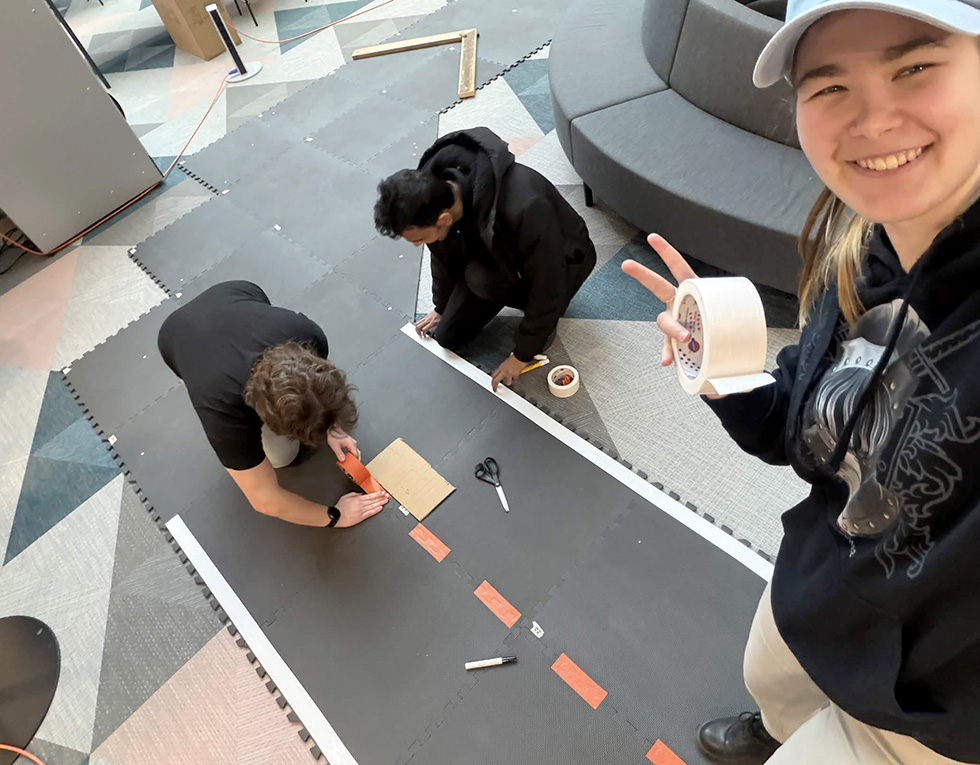
Multidisciplinarity ensures faster problem solving
Students say that the mix of their study paths, including embedded technologies, cybersecurity and interactive technologies, helped the team move faster.
“Hardware-savvy students can focus on compatibility issues. Others can contribute to machine learning frameworks, simulations and testing. AI tools are also running in the background throughout the development process,” tells team member Matias Niskanen.
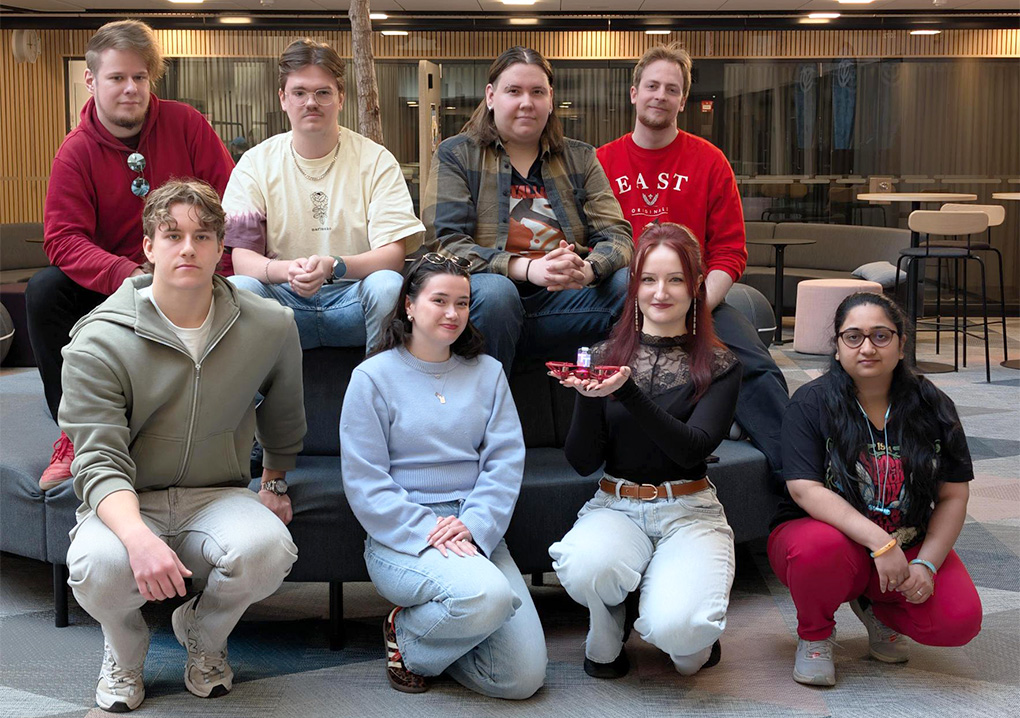
Autonomous racing car development team: Md Ibrahim Abdullah, Nico Kaunisto, Mikko, Matias Niskanen, Antton Veijalainen and Salome Virtanen.
Cherry became a masterpiece of human-robot interaction
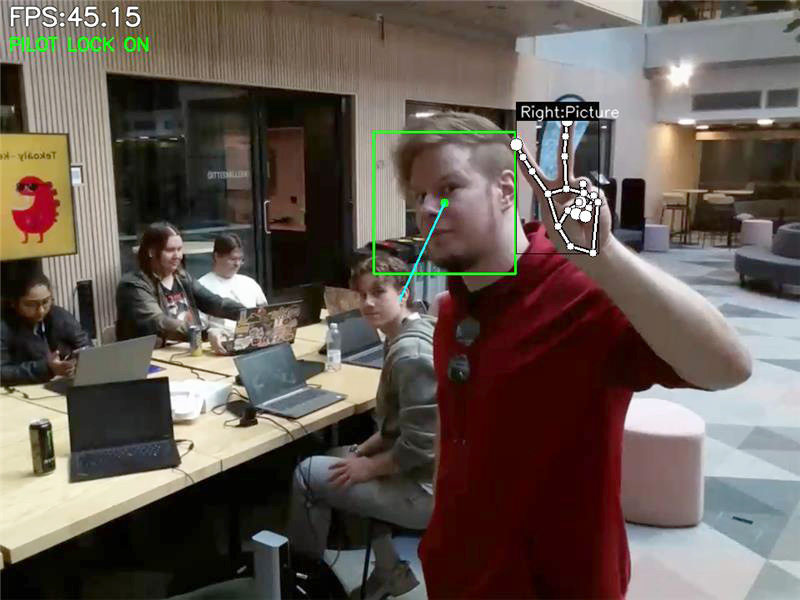
Another team of students took up the challenge of developing interactive camera drones. In a project focusing on human-robot interaction, the students coded a drone – named Cherry – to follow a person and respond to hand gestures. The solution allows the drone to be controlled without traditional remote controls. The drone uses its own camera as a machine vision system, and a laptop takes care of the computing needs of the system.
The team includes students from fields such as mechanical engineering, business administration and software development. Programmers focused on integrating the drone’s vision and control code, while mechanical engineering students contributed a robotics perspective on how the system should behave in real-world use. Business students supported the project by thinking through product and marketing angles.
“We’ve had our ups and downs, as projects always do,” tells Lari Valta, a third-year mechanical engineering student and project leader.
“Now the code runs smoothly.”
Testing around the campus
Small-scale test flights on campus led the team to consider safety and usability.
“Testing in a real environment gave us valuable insight into how people behave around a drone,” says Iida Taponen, a mechanical engineering student.
The Cherry-drone is a perfect example of end-user oriented technological development.
The drone development team: Ripal Acharya, Akseli Anttonen, Eliel Hagner, Matias Kenney, Sophie Pankov, Iida Taponen, Lari Valta and Jeanne Vernier.
There is no need to fear artificial intelligence
Students approaching their final year are not afraid of the rapid development of artificial intelligence. Students talk about the role of AI as a tool to facilitate coding and complex troubleshooting. While the job market is changing and some roles may disappear altogether, students are confident about their career prospects.
Students report that AI is seen as an enabler. So far, AI applications offer almost free resources to develop their skills. Learning up-to-date tools and a critical understanding of the reliability and use of AI will keep them at the forefront of developments, summarize these two student teams that have developed cutting-edge technology.
-Before, only large corporations had the capital to hire vast teams of specialists. Today AI provides “practically free” or low-cost resources for students and independent developers working with limited budgets.
Read more
Read next
-
Fact

The Story of Sonic: How a game icon found a home at Turku UAS
Visitors stepping into the Turku UAS’s ICT‑City often stop in surprise: standing nearly two meters tall, the iconic blue hero Sonic the Hedgehog greets everyone at the lobby.…
-
NewsStudent
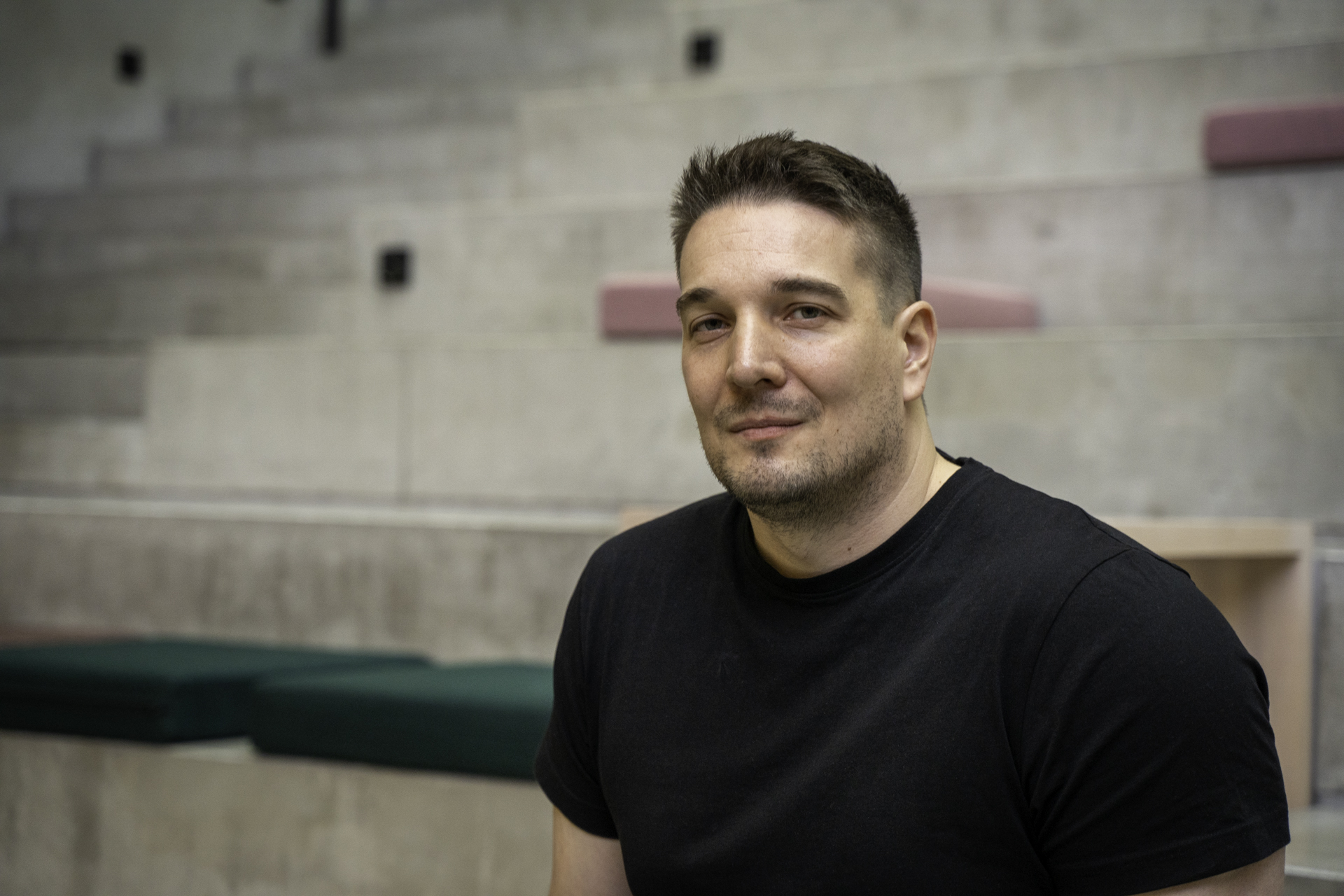
Turku UAS student’s thesis is nominee for AI Thesis of the Year
AI Finland announced the nominees for the 2025 AI Thesis finalists. Joni Obradovic’s thesis made it to the top three. Obradovic studied Information and Communications Technology Engineering in…
-
CasePress Release
1000 students from Turku University of Applied Sciences develop sustainable development solutions for organisations in Turku
In a new joint project between Turku University of Applied Sciences and the City of Turku, students are solving sustainability problems in companies and other organisations. Published: Edited:…