As demographic change and improving cancer survival rates increase the demand for cancer-related care, competencies in oncology are becoming essential for nurses across all areas of practice. A fundamental understanding of the entire cancer care journey is therefore vital for every nurse. The new digital learning resource offers nursing educators free access to evidence-based materials that support the teaching of high-quality, person-centred cancer care throughout the care continuum.

Published:
Edited:
Cancer is one of the most common diseases worldwide. Cancer patients are also treated outside of specialised medical care. This means all nurses need basic competences in cancer prevention, early detection, treatment, supportive care and communication skills.
Evidence-based learning resource for cancer nursing education
“Cancer care is part of every nurse’s work, regardless of the clinical setting”, explains project manager Isa Öhberg from Turku University of Applied Sciences.
All nurses need basic competences in cancer prevention, early detection, treatment, supportive care and communication skills.
EduCanNURS -Toolkit is a digital learning environment on the Thinglink platform, created for teaching cancer nursing to undergraduate nurses.
“Through EduCanNURS, we have created accessible and evidence-based learning resources that help nursing students develop the competencies needed to provide high-quality care throughout the cancer care continuum”, Öhberg says.
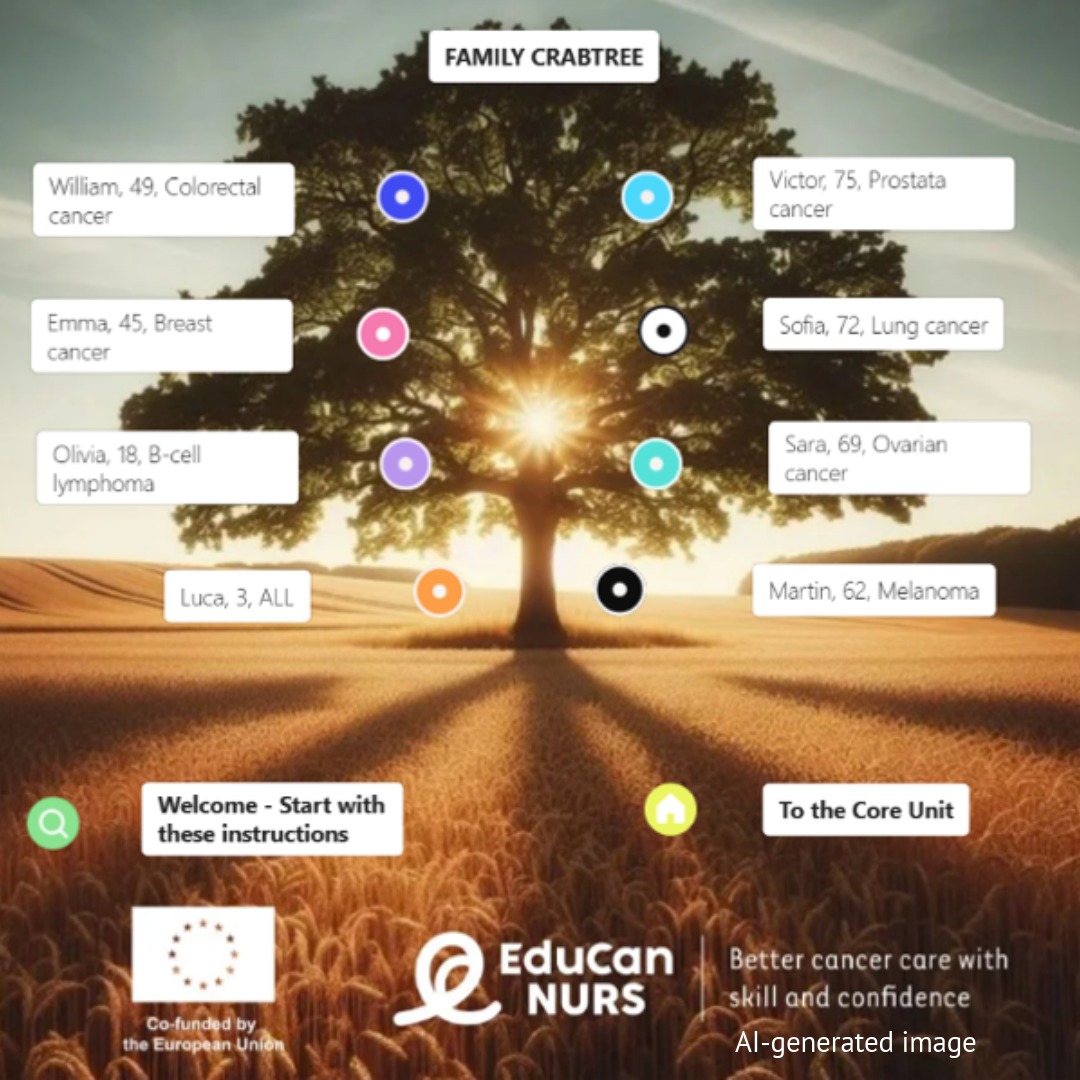
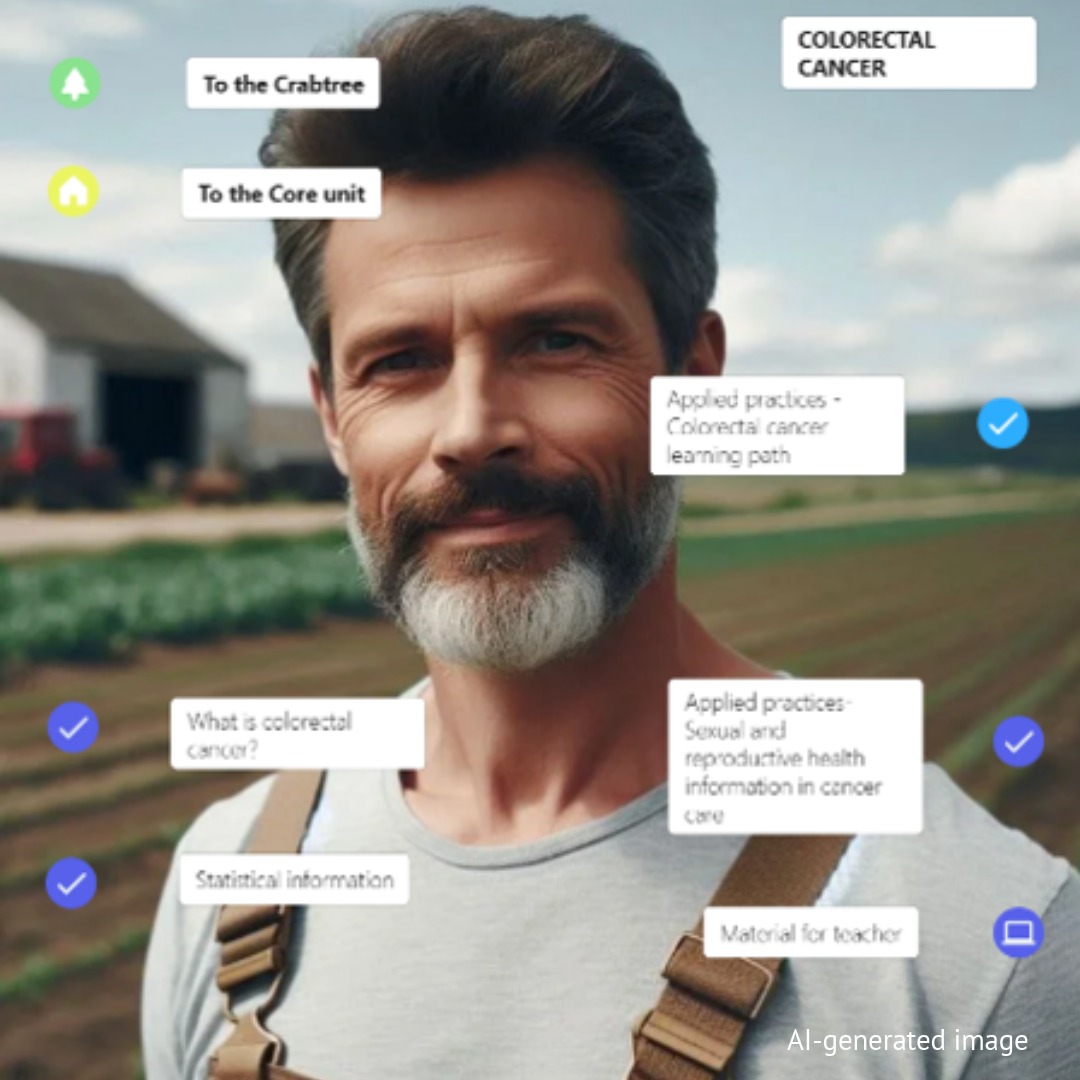
Examples of content from the toolkit. On the left is a view of the front page; on the right is an example of an illustration for a patient case. The images were created using artificial intelligence.
From prevention to palliative care
The toolkit includes material for different patient cases on the eight most common types of cancer in Europe and the cancer treatment continuum. The continuum includes cancer prevention, cancer diagnosis, cancer treatment, supportive care and coping, rehabilitation and self-care, and palliative care.

Better trained nurses will benefit the patients and their loved ones with high-quality care and interaction throughout the treatment path.
Isa Öhberg
Senior Lecturer, Project Manager
Supporting educators across nursing curricula
For the educators the platform offers access to evidence-based teaching materials (e.g. videos, posters, slides), learning assignments and assessment tools to support their teaching. It can also be used by teachers who do not have expertise in cancer nursing, and thus the teaching of cancer nursing can be expanded to the different stages of the curriculum.
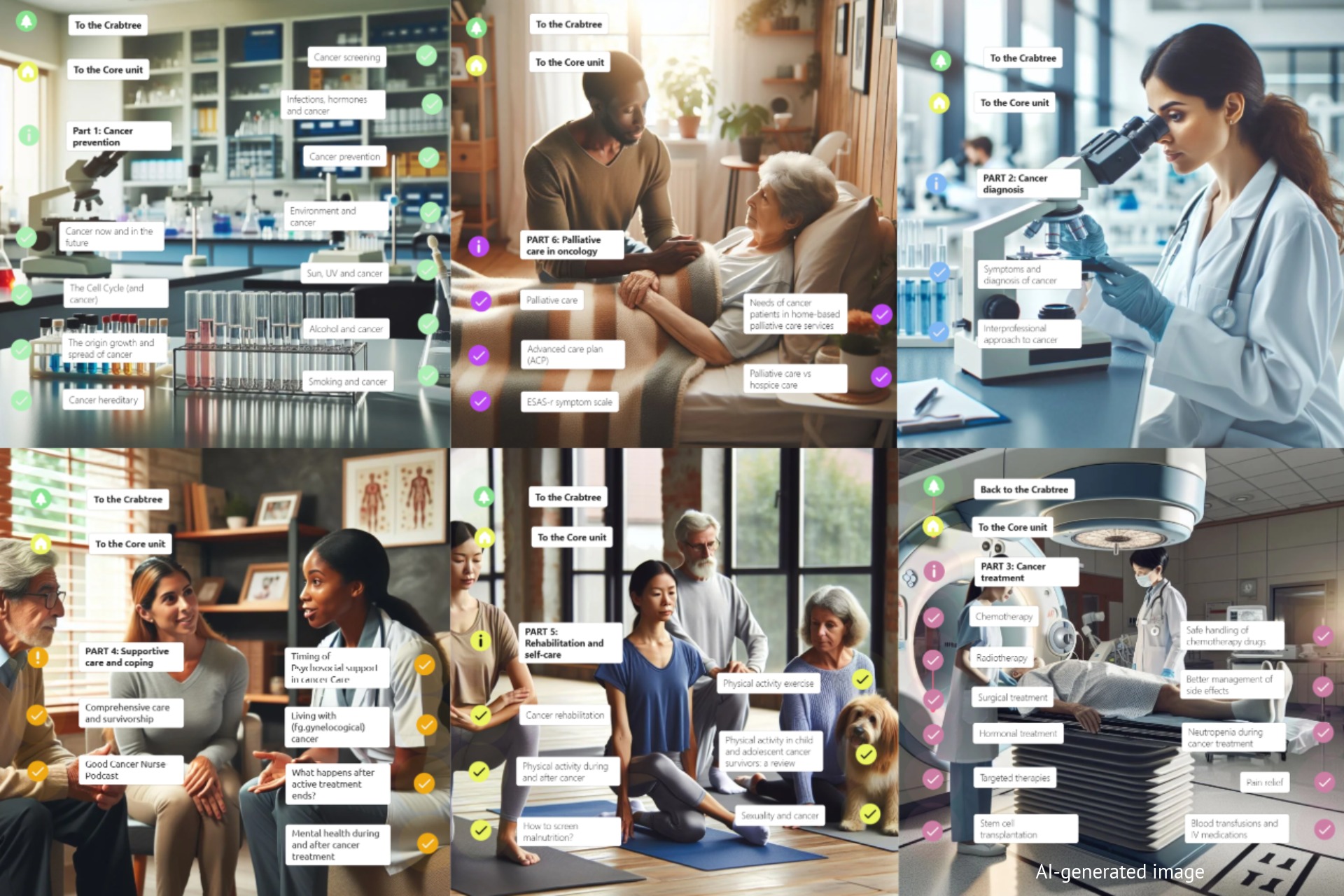
Examples of the cancer care continuum phases in the toolkit. Images are AI generated.
International Cooperation
Together the EduCanNURS project partners from Finland, Ireland and Croatia analysed existing nursing curricula and cancer care education in the participating universities and conducted a literature review.
Based on the learnings, evidence-based educational content and a training module was created covering the entire cancer care continuum. A pilot module was tested with the participating partners, students and teachers. Based on the user feedback, the learning materials and teaching approaches were further evaluated and developed to best support the learning and teaching experiences.
“International collaboration allows us to share expertise, compare educational practices and develop innovative learning solutions together. EduCanNURS strengthens nursing students’ readiness to care for people affected by cancer in a rapidly changing healthcare environment”, comments content expert Maura Dowling from the University of Galway.
“By developing common resources and recommendations, we contribute to more consistent and high-quality cancer care education across Europe”, continues Silvija Piškorjanac from the Josip Juraj Strossmayer University of Osijek.
EduCanNurs
EduCanNURS is a 3-year (2023-2026) Erasmus+ project that aims to strengthen cancer care competencies in undergraduate nursing education and support the harmonisation of cancer nursing education across Europe. Ultimately, better trained nurses will benefit the patients and their loved ones with high-quality care and interaction throughout the treatment path.
Project is implemented in collaboration between Turku University of Applied Sciences (Finland), University of Galway (Ireland) and Josip Juraj Strossmayer University of Osijek (Croatia).
More information:
Isa Öhberg, project manager, Turku University of Applied Sciences, isa.ohberg@turkuamk.fi
Maura Dowling, content expert, University of Galway, maura.dowling@nuigalway.ie
Silvija Piškorjanac, content expert, Josip Juraj Strossmayer University of Osijek, silvija.piskorjanac@gmail.com
Main image: Adobe Stock
More Information

Funded by the European Union’s programme Erasmus+. Views and opinions expressed are however those of the author(s) only and do not necessarily reflect those of the European Union or the Finnish National Agency for Education. Neither the European Union nor the EDUFI can be held responsible for them.

Read next
-
News
Shared leadership strengthens project team resources but requires clear roles
According to a doctoral dissertation by Marion Karppi, Lecturer and Research Group Leader at Turku University of Applied Sciences (Turku UAS), shared leadership can enhance work-related resources, learning,…
-
News

The potential of AI to support everyday work in the social sector
Can AI to help streamline everyday life in the social sector? A new project , coordinated by Turku UAS, is exploring what kind of tasks in the social…
-
Press Release

New app brings integration services directly to your mobile phone
Turku University of Applied Sciences has developed a mobile app that helps immigrants find information on, for example, housing, studies, benefits or early childhood education. The app, which…