
Utilizing and storing waste heat can solve many problems related to energy demand and climate change. Additional benefits would arise if industrial byproducts and construction waste—which would otherwise end up as trash—could be used as heat storage media. Turku University of Applied Sciences is investigating the use of waste materials as waste heat storage in collaboration with Green Net Finland and Centria University of Applied Sciences.
Published:
Edited:
Text: Martti Komulainen
Photos: Martti Komulainen, Green Net Finland
Industrial processes, wastewater, energy production and consumption, and data centers are all sources of heat that go to waste. If even a portion of this could be captured, it would result in significant savings in both energy efficiency and environmental emissions. When implemented intelligently, the storage of “waste heat” helps alleviate peaks in energy demand and also supports energy production.
At Turku University of Applied Sciences, several projects have explored the possibilities and business potential of recovering and storing waste heat.
–The goal of our projects has been to increase understanding of the design and implementation of thermal storage systems. We have participated in several seminars and meetings to share our experiences. The most valuable outcomes have been the contacts made at these events and the knowledge we’ve gained about others’ expertise, explains Rauli Lautkankare, lecturer and project manager with the New Energy research group at Turku University of Applied Sciences.
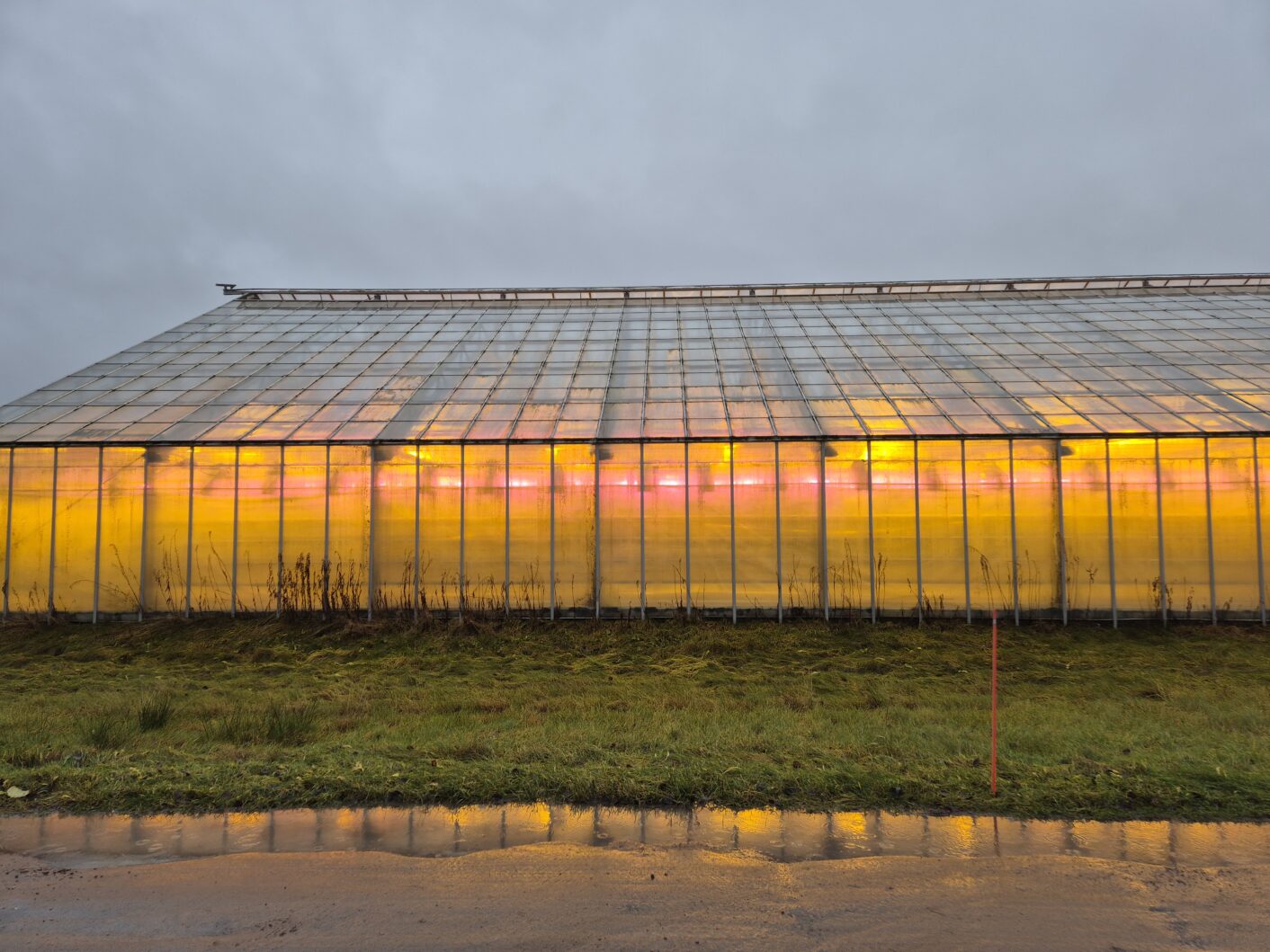
Waste heat is already being utilized to a significant extent in Finland, but there is still ample potential for further utilization. According to data from the Ministry of Economic Affairs and Employment (TEM), approximately 130 terawatt-hours per year (TWh/a) of waste heat is generated in Finland, and about 3 TWh/a of this is utilized for district heating. For example, large energy companies utilize waste heat from wastewater (Helen, Turku Energia, Vaasan Sähkö) and waste incineration (Vantaan Energia). Waste heat is also utilized to some extent in industry. In particular, there are still many heat sources on a smaller scale or at lower temperatures that remain untapped. These can be found, for example, in many greenhouse operations.
What is waste heat?
Waste heat is unused thermal energy generated as a byproduct of energy production and consumption, as well as industrial processes. It is generated wherever energy is used. Waste heat is released into the environment through flue gases, exhaust air, wastewater, and cooling water.
An estimated 130 TWh (terawatt-hours) of waste heat is generated annually in Finland, of which approximately 35 TWh can be technically utilized. These figures are significant, as Finland’s total energy consumption in 2025 (preliminary estimate) was approximately 355 TWh.
Recovering Waste Heat
–The main challenges in recovering waste heat are technical and economic. Finland has significant potential for waste heat recovery, but realizing this potential requires simultaneously lowering the temperatures in district heating networks, increasing heat storage capacity, and optimizing the integration of the electricity and heating sectors. Market and contract models must also be developed in such a way that they reward the reduction of material and energy production and consumption, notes Rauli Lautkankare.
– When utilizing waste heat, the heat source and the point of use for the waste heat must be located relatively close to each other so that heat transfer losses do not increase excessively. The source of waste heat and the point of use can be managed by either the same entity or by different entities, notes Ilkka Aaltio, Executive Director of Green Net Finland.
Waste heat can be recovered using heat exchangers and heat pumps. Heat pumps, in combination with thermal energy storage (TES), play a key role in the utilization of waste heat.
Heat can be stored in water as well as in mineral- and soil-based storage systems (such as energy wells). In addition to actual waste heat, thermal storage systems can also be used to store excess electricity by heating materials such as sand or other mineral substances with electric resistors.
Waste heat can be used directly or after storage as a source of district heating or cooling, as well as for heating or drying purposes near the point where the heat is generated.
Waste heat can be utilized in many ways, even outside the district heating system. For example, heat generated in industry can be used to preheat other processes, so that energy is not wasted but instead serves multiple purposes.
In urban environments, waste heat can be used, for example, to keep streets free of ice, which improves safety in the winter and reduces the need for separate heating energy. Furthermore, when waste heat is at a sufficiently high temperature, it can be converted into electricity. In this way, waste heat is not merely a byproduct, but a valuable energy source whose utilization improves energy efficiency and reduces overall energy consumption.
Industrial by-products and soil from infrastructure construction as thermal storage media
The RESINA project is investigating the use of industrial by-products, various materials classified as waste, and surplus materials from infrastructure construction (such as clay) and construction waste as thermal storage media. Using waste materials as thermal storage could promote not only energy efficiency but also the circular economy by finding new uses for waste.
In the RESINA project, as well as in the earlier ULLEVI project, waste incineration slag, clay, foundry sand, ash, and slag from the metal industry have been or will be tested as materials for thermal energy storage. The testing environment consists of the TESLab (Thermal Energy Storage Lab) at Turku University of Applied Sciences and research containers at various locations.
–The tests are still in the early stages. There are many materials to study and variables to investigate—including particle size, moisture content, thermal conductivity, the material’s resistance to thermal cycling, and the thickness of the insulating layer. For this reason, mathematical modeling has also been used in this work. Based on these models, a demonstration facility will be built to gain practical experience and validate the mathematical models.
–What’s great about this is that we can support Finnish companies in the development of thermal storage systems in a way that ensures a wide range of thermal storage solutions developed in Finland will certainly be adopted on a global scale. In particular, I’m thinking of the use of waste-based materials in thermal storage systems, medium-depth geothermal energy, and energy piles, envisions Rauli Lautkankare.
Check it out
Read next
-
Press Release

Digital learning toolkit launched to strengthen nurses cancer care competencies
As demographic change and improving cancer survival rates increase the demand for cancer-related care, competencies in oncology are becoming essential for nurses across all areas of practice. A…
-
Press Release
Study: Values Influence the Decision to Buy Refurbished Electronics
Consumers’ perceptions of refurbished electronic products are often based more on emotions than on knowledge of their actual characteristics. Therefore, the perceptions associated with used and subsequently refurbished…
-
Press Release

Interview Study by Turku University of Applied Sciences: Technology Cannot Replace Salespeople, Judgment Is the Key to Closing Sales
New technologies have rapidly transformed business-to-business sales. According to a recent study, the most critical factors are the appropriate use of tools and the salesperson’s ability to choose…