Kalavahti – Ensuring Fish Quality with a Cost-Effective AI Solution
Project Duration
Source of Funding
European Maritime, Fisheries, and Aquaculture Fund (EMKVR)

Total Funding
160,000 €
The Kalavahti project develops a cost-effective sensor and AI-based solution for assessing the quality of farmed fish. The aim is to detect geosmin-related off-flavours rapidly without the need for time-consuming laboratory analyses. The project combines an electronic nose, AI-driven data analysis, and measurement data collected from aquaculture environments.
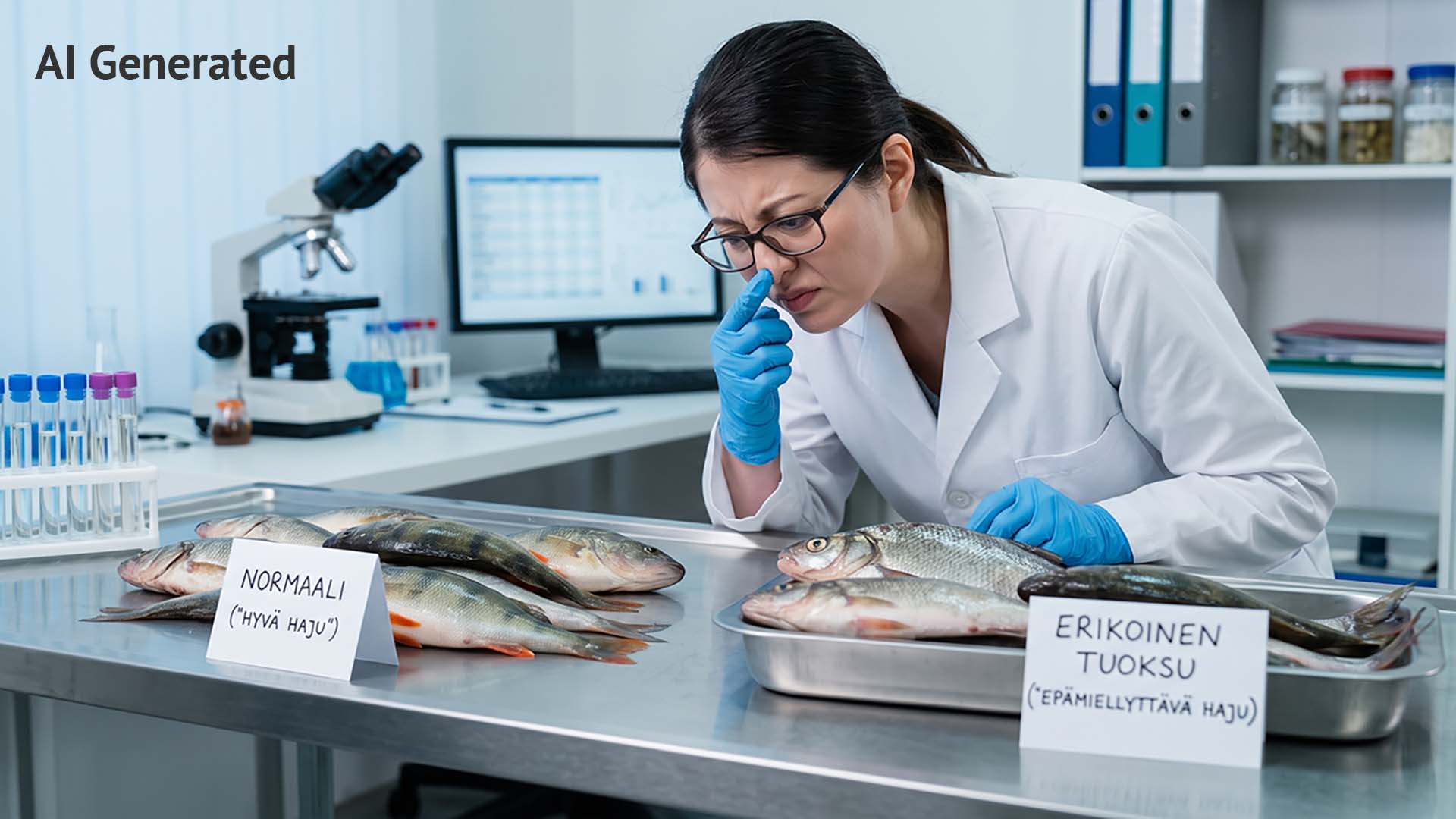
Geosmin is a microbe-derived compound that can cause farmed fish to develop an off-flavor resembling mud, soil, or mold. The compound is not harmful to health, but it reduces consumer acceptance and marketability of the fish. For fish farmers, this quality defect can lead to delivery delays, rejection of fish batches, and additional costs.
We’re teaching artificial intelligence to detect quality defects
In this project, we are using a MOX (metal oxide) sensor, also known as an “electronic nose.” The sensor reacts to volatile compounds present in the sample, and the measurement data it produces is analyzed using a neural network. Our goal is to train the neural network to identify anomalies and changes related to geosmin in fish or water samples.
What the project involves
In the project:
- We are developing and calibrating a sensor-based method for detecting geosmin
- We test the sensitivity of the method using commercial standard samples
- We collect fish and water samples from a real aquaculture environment
- We compare sensor measurements with GC-MS laboratory analyses
- We are training an AI model that utilizes sensor data
- We are testing the method under laboratory and field conditions
- We assess the practical feasibility of the solution, its costs, and the need for further development
The result: a field-tested monitoring method
The project will result in a method—tested under laboratory and field conditions—for detecting and predicting quality defects related to geosmin. A viable solution could help fish farmers better time their harvests, shorten delivery delays, and reduce the risks associated with quality defects.
Who is this project intended for?
The project’s results will be of particular benefit to fish farms, fish processors, and companies and development organizations working in the fields of aquaculture quality management and technology.

Contact Us

Learn more about the research group
-
Research Groups
New materials and processes
-
Research Groups
Cognitive Technologies Research Group, CoRe
See all our projects
We carry out nearly 200 RDI projects annually together with working life and our international partner networks.