The NEMESIS research infrastructure collects data related to the state of the environment and maritime safety in the archipelago.NEMESIS, a collaboration between three universities, enables long-term monitoring of research and changes in environmental and safety anomalies in the marine environment.
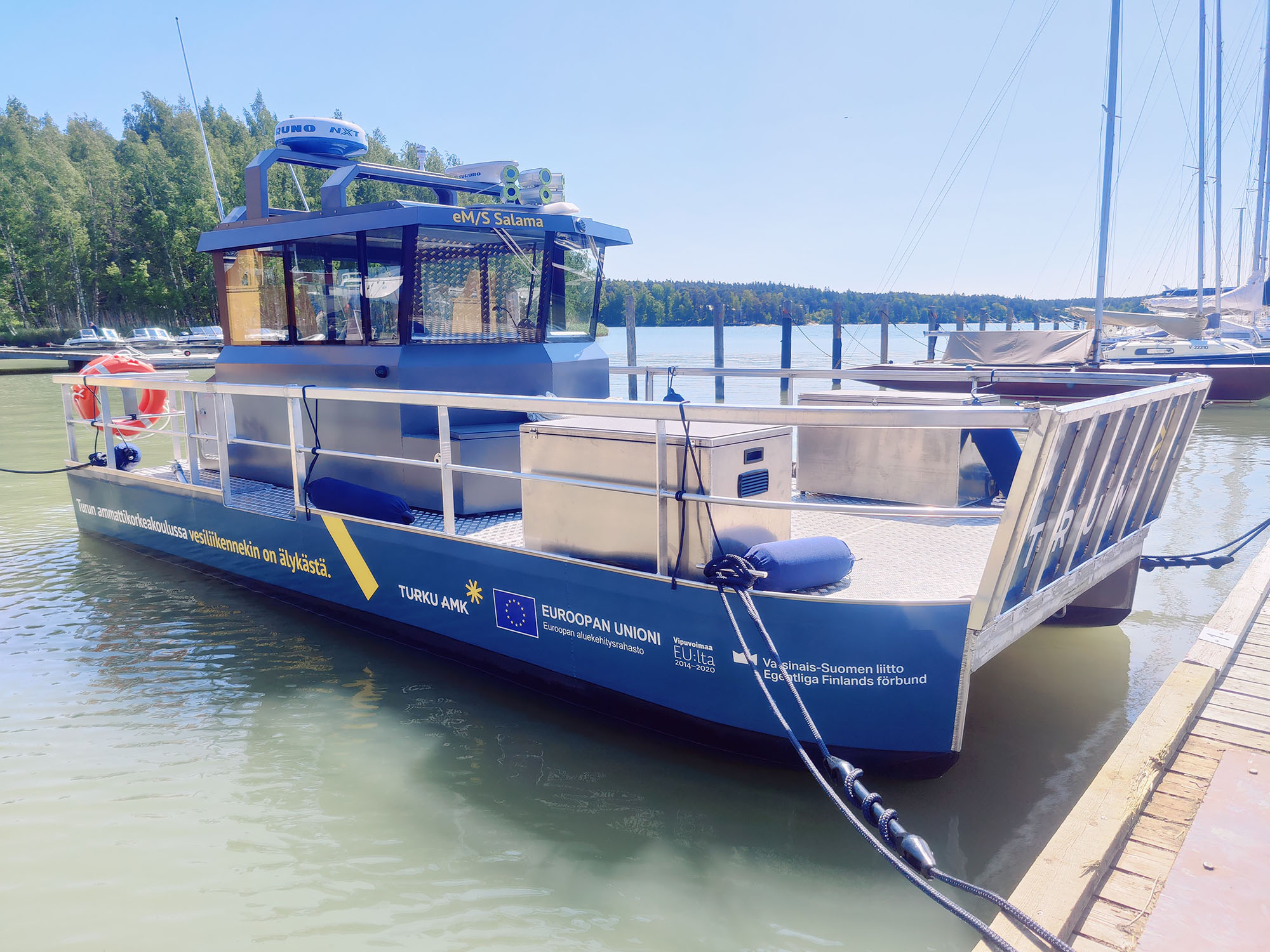
The Turku University of Applied Sciences’ test vessel, the M/S Salama, collects critical data from the maritime operating environment to support machine learning for autonomous navigation. Photo: Turku University of Applied Sciences.
Published:
Edited:
Substantial funding has been granted to the Turku region for the collection of environmental and safety data in the coastal areas of the Archipelago Sea for the NEMESIS (Networked Environmental Monitoring and Evaluation System for Intelligent Surveillance) research infrastructure.
The Research Council of Finland has granted nearly 15 million euros in total for ten local research infrastructures. These projects will launch on 1 January 2026 and last for three years.
The funding aims to promote regional vitality and ambitious R&D activities by directing funds towards constructing and upgrading locally significant research infrastructures.
“Unlike typical research infrastructure calls, this funding call primarily focused on promoting regional smart specialisation and provincial strategy goals. It encouraged cooperation between higher education institutions, promoted new innovations, and utilised R&D activities for the benefit of society,” says Juhani Soini, Vice Rector of Turku University of Applied Sciences.
“During the preparation process, we identified several other joint priorities in addition to the NEMESIS project that we can focus on immediately, such as technology campus cooperation between universities,” Soini continues.
“Since the call for applications placed particular emphasis on consortia within provinces, and each organisation was allowed to submit a maximum of three applications, we collaborated with other higher education institutions in the Turku region during the application phase,” says Piia Seppänen, Vice Rector for Research at the University of Turku.
The Research Council of Finland awarded nearly two million euros to the NEMESIS infrastructure consortium. The consortium includes Turku University of Applied Sciences (leading the consortium, with Jarkko Paavola, Head of Education and Research, as the person in charge), the University of Turku (partner, Elina Kasvi, Associate Professor of Geography) and Åbo Akademi University (partner, Professor Christian Pansch-Hattich).
NEMESIS enables long-term monitoring of environmental and security anomalies in marine areas
The purpose of the NEMESIS research infrastructure is to support interdisciplinary research, focusing on the interaction of drainage basins and coastal seas, coastal and aquatic ecology, and coastal maritime security-related aspects.
The research infrastructure addresses the critical need for comprehensive coastal marine data collection in the Archipelago Sea region and its catchment area situated on the Southwest coast of Finland in the northern Baltic Sea. The infrastructure collects data from sources related to the state of the environment and maritime security. NEMESIS allows researchers to study environmental and security anomalies, as well as long-term changes.
“NEMESIS combines unmanned surface vessels, water and environmental protection, and marine environment research and development infrastructures into a unified platform, enabling significant further development. We can comprehensively study the state of the environment and situational awareness related to security,” says Jarkko Paavola, project manager and head of education and research at Turku University of Applied Sciences.
“This joint project is very important because we all share the same goal of protecting the Archipelago Sea. The project allows us to combine our forces from the catchment area to the Archipelago Sea, deepen our cooperation, and complement each other’s expertise. I believe this is a significant starting point for long-term collaboration in the region,” says Elina Kasvi, Associate Professor at the University of Turku and the Digital Waters (DIWA) flagship project.
“We are pleased to work closely together to collect essential environmental data in the Archipelago Sea. We can now measure marine weather conditions and closely monitor the region across different marine environments over the long term. We can also collect and coordinate dispersed datasets, for the benefit of both science and society,” says Christian Pansch-Hattich, Professor of Marine Ecology at Åbo Akademi University.
NEMESIS integrates fixed observation stations and measurement vessels into a single flexible system. Some of the vessels are unmanned, meaning they are either remotely operated or autonomous. The observation equipment is connected to a centralised data platform and a remote operation center via real-time data transfer.
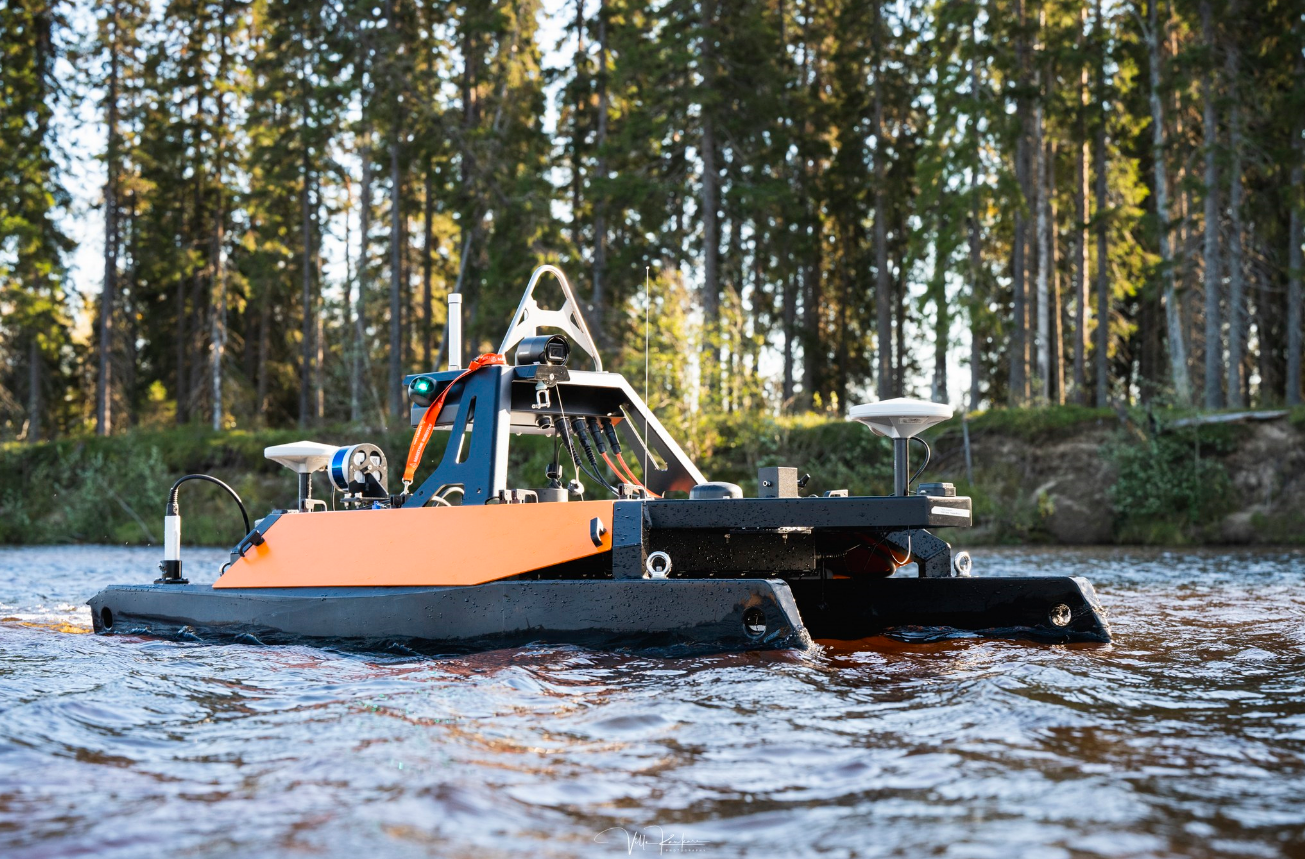
Otter is an autonomous measurement vessel capable of producing a precise 3D point cloud both above and below the water surface. It can be equipped with instruments such as a water sampler and various sensors. Photo: Ville Kankare, University of Turku.

The Åboat platform, a remotely controlled research boat developed by the IT unit at Åbo Akademi University, deployed and tested in Åbo Akademi University’s Biological Station in Husö, Åland. Photo: Åbo Akademi University.
Further information

Get to know our research
Read next
-
Press Release

New app brings integration services directly to your mobile phone
Turku University of Applied Sciences has developed a mobile app that helps immigrants find information on, for example, housing, studies, benefits or early childhood education. The app, which…
-
Press Release

New research group brings reliable and human-centric AI solutions to businesses
The Cognitive Technologies Research Group at Turku University of Applied Sciences builds intelligent decision-making systems and combines disparate data sources into a functional whole. At best, technology development…
-
NewsStudent
Turku UAS student’s thesis is nominee for AI Thesis of the Year
AI Finland announced the nominees for the 2025 AI Thesis finalists. Joni Obradovic’s thesis made it to the top three. Obradovic studied Information and Communications Technology Engineering in…