
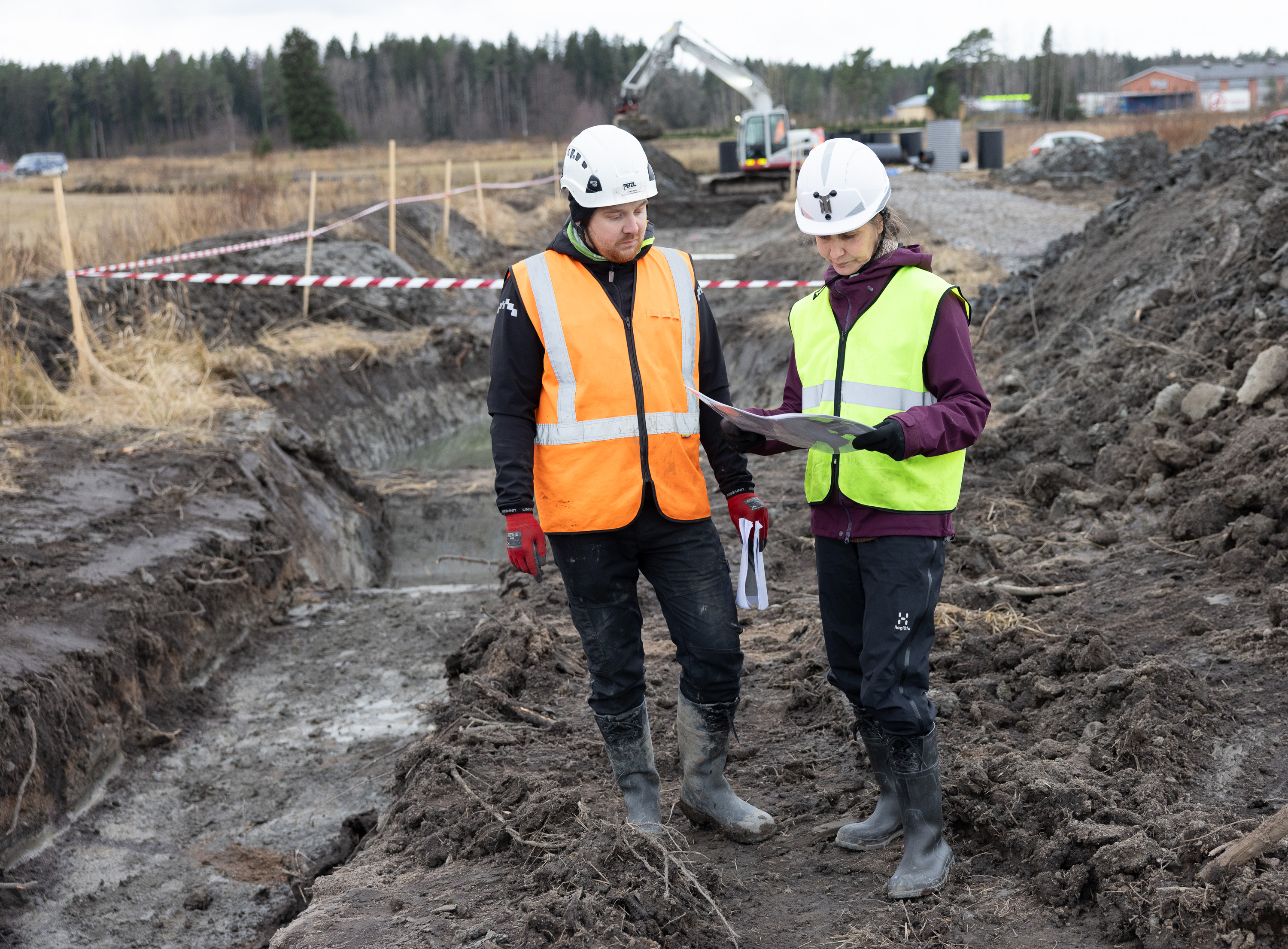
At the pilot plant in Kuninkoja in Turku, Finland, different methods are being tested to reduce harmful PFAS compounds. The pilot plant implemented by Turku UAS is the first of its kind in Finland, as nature-based PFAS treatment structures do not yet exist elsewhere in the country.
Published:
Edited:
Text and photos: Martti Komulainen
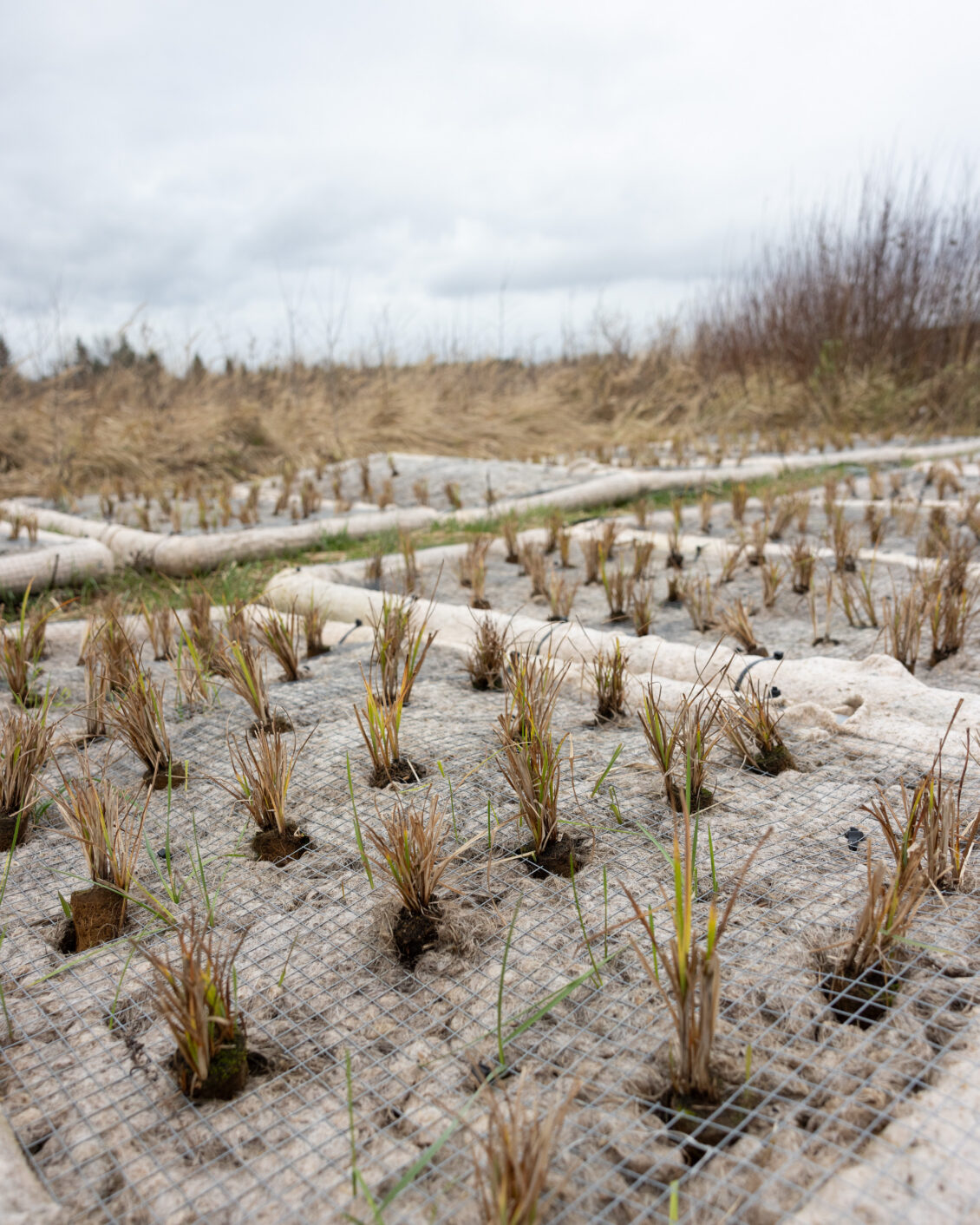
The treatment methods used at the Kuninkoja pilot plant are a combination of sand and activated carbon filters and floating plant rafts.
The experiments are part of the BalticPFASResolve (PFAS Source Tracking, Mitigation, and Remediation in the Central Baltic) project of Turku University of Applied Sciences.
– We are looking for a cost-effective method that would have a significant impact. From an environmental perspective, it makes more sense to have several sites where we can remove, for example, half of the emissions than to build one costly facility capable of removingall PFAS contaminants, says Piia Leskinen, Principal lecturer at Turku UAS from the Water and Environmental Protection Research Group.
Forever chemicals are everywhere
PFAS compounds (per- and polyfluorinated alkyl compounds) are often referred to as “forever chemicals”. They do not break down in nature but instead accumulate both in the environment and in the human body. PFAS compounds are used in many everyday products and as industrial chemicals due to their dirt, water and grease repellent properties. They can be found, for example, in waterproof and dirt-repellent clothing, Teflon-coated frying pans, fast food packaging, paints and firefighting foams.
PFAS compounds are very widespread in our environment. In previous surveys, high PFAS concentrations have been detected at Kuninkoja in Turku, which originate from the firefighting foams used in the nearby airport’s firefighting exercises. New EU-level restrictions on PFAS firefighting foams will enter into force next year, but emissions from the use of foams from previous years will continue for a long time as contaminated groundwater is discharged into ditch water.
According to studies, PFAS compounds can, among other things, increase the risk of cancer, cause liver damage, weaken the immune system and disrupt the endocrine system.
The treatment plant now under construction will be completed in spring 2027, and its treatment efficiency will be monitored regularly.
More Information

Learn more
Read next
-
Phenomenon

Turku UAS accelerates the development of dual-use technologies
The faculty of ICT and Industrial Engineering at Turku University of Applied Sciences brings together the needs of companies, broad research expertise and strong defence-sector networks. The aim…
-
Phenomenon

“AI does not replace judgement – it increases the need for it.”
Better decisions start with better understanding. Kari Kallinen, Chief Advisor at Turku UAS, studies how artificial intelligence can help us make better decisions – without handing our judgement…
-
Press Release

Turku UAS is establishing a new research and expertise center to meet the needs of the maritime industry
The new Center for Maritime and Shipbuilding Technologies brings together Turku University of Applied Sciences’ research and education related to the maritime industry. The center strengthens Turku UAS’…