Annual Report 2025
Better results for the region
Turku University of Applied Sciences exists to support the success of Southwest Finland. Our task is to increase the region’s expertise so that the region’s well-being and competitiveness increase even in the current difficult global political and national situation.
In 2025, a record number of new professionals graduated from Turku University of Applied Sciences, and at the same time, we carried out more working life-oriented research, development and innovation work than ever before. We produced a record number of expert publications, with which we disseminated information for both scientific and daily needs. Our graduates were more satisfied than in previous years, and the results of the personnel survey also continued to improve. Both our number of employees and net sales grew to a record level. I believe that our experts behind these results have done a lot of the right things for Southwest Finland.
In 2025, we also conquered new territory. Turku University of Applied Sciences is strongly committed to being a nature-positive organisation in accordance with the goals of the City of Turku. That is why we reduced our carbon emissions, but for calculation reasons, we will not reach completely zero. Therefore, we took a different direction and acquired ownership of a 42-hectare forest plot in Salo for conservation purposes. The plot is very diverse and provides a good home base for increasing natural values and the use of the area for both research and recreation.
Our partners are at the heart of everything we do. We have expanded both our key partnerships and our larger partner network during the year. We want to be as close to working life as possible so that we can produce new future makers and new expertise that will enable our region’s organisations to achieve their own goals at a more ambitious level than before. A warm thank you to all our current and future partners for your commitment to the common goals.
As the Rector of Turku University of Applied Sciences, I am constantly grateful for the wonderful work done by our committed experts and students. It is a privilege and an honour to be able to work in such a group. The world throws obstacles in our way, but together we can clear them and continue towards a better future.
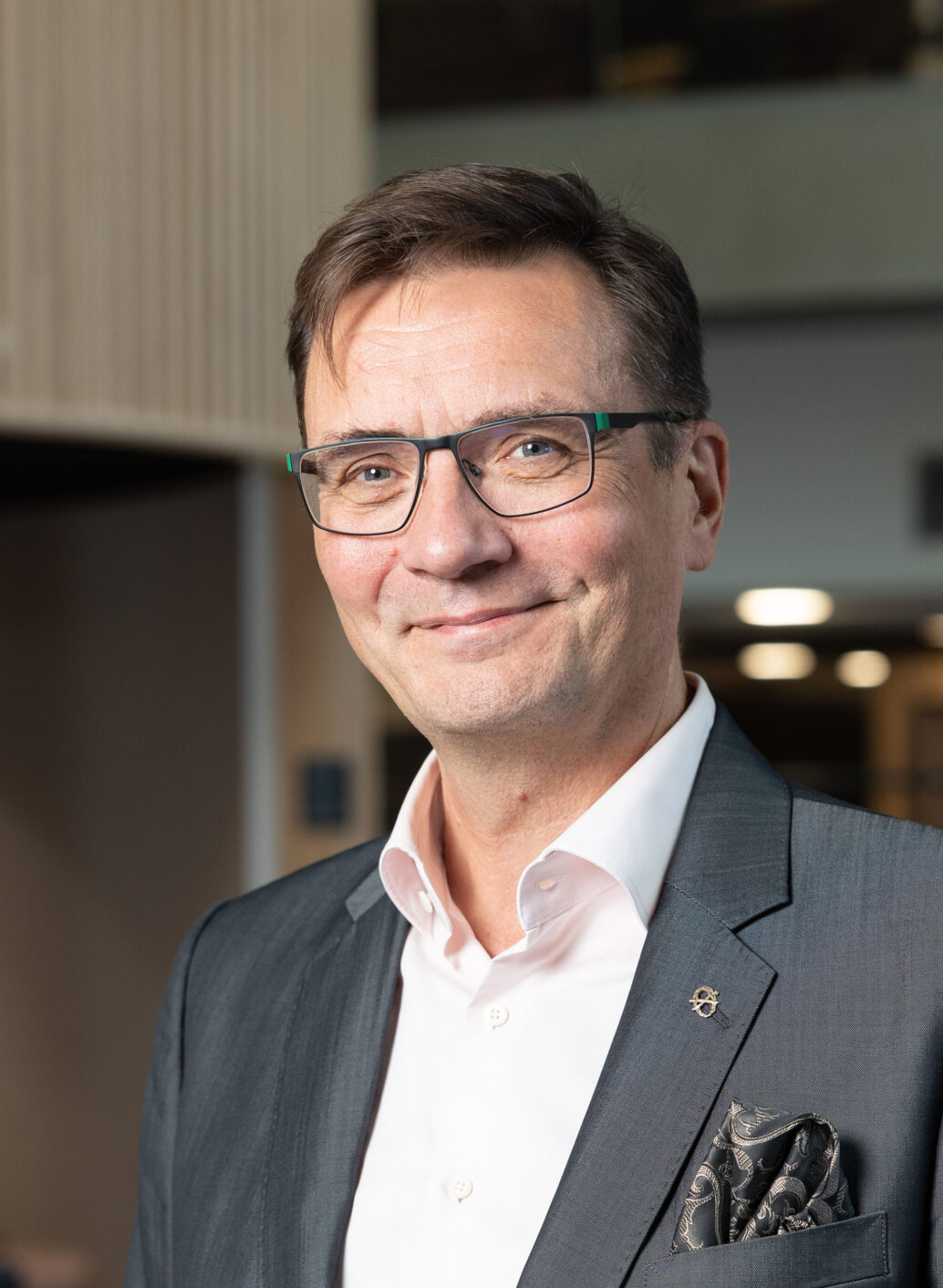
Vesa Taatila, Rector and President
Our finances and operations grew
External RDI funding
Number of degrees
According to practically every indicator, 2025 was a good year for Turku UAS. Most of the operational indicators showed record-breaking performance, and in terms of financial performance the result far exceeded the estimate in the budget.
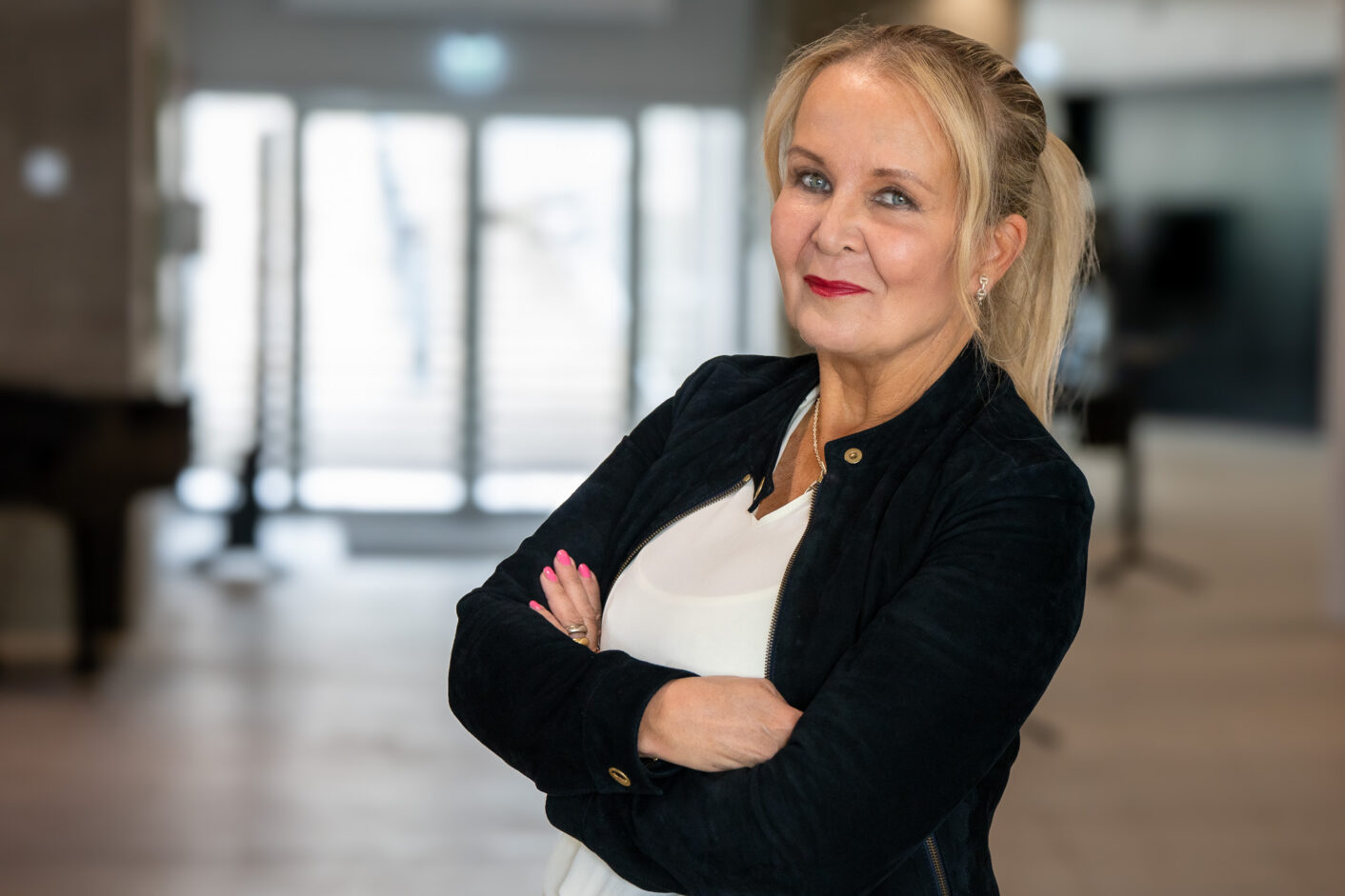
Ulla-Maija Lakka
Director of Finance and Administration
Examples of economic growth and a stable financial position:
- Solvency ratio 78% (79% in 2024).
- Suomen Asiakastieto Oy’s “Strongest in Finland Platinum” certificate.
- The Rating Alpha rating is an excellent AAA
Award
Finland’s Most Inspiring Workplaces
For the first time, we have been awarded the prestigious Most Inspiring Workplaces in Finland award as part of a national HR survey conducted by Eezy Flow.

We are meeting the national need
Sustainable growth in Finland by RDI
The Research and Innovation Council has published new National Strategic Priorities for RDI policy and activities. Our research seeks solutions to the societal problems of our time.
Research and development
We carried out applied research and development for the region, in collaboration with our partners.
Our Baltic Sea
- We are exploring how Unmanned vessels can be used in maritime surveillance.
- We received joint research infrastructure funding with Turku higher education institutions to collect and utilise data from the Archipelago Sea.
At home in a hybrid world
- We set up a new Cognitive Technologies Research Group.
- We developed Finland’s first synthetic health data platform together with Health Campus Turku operators.
The good life
- We brought integration services to your mobile phone.
- Together with Eerikkilä, we are researching and developing well-being and performance management.
Green economy
- We are exploring the possibilities of 3D printing of medicines.
- We promote the circular economy locally through the Circular Science Park project, together with our partners.
Read more about research and development at Turku University of Applied Sciences.
Read more about our work with businesses and other organisations.
The Sustainability Report
Our vision is that in 2030, Turku UAS will be a higher education institution that does not weaken the environment, nature and climate, and that will work actively to promote sustainable development and responsibility at the local, national and international levels.
“With the sustainability report, which is published for the first time, we want to demonstrate our commitment to building a sustainable future together with students, staff, partners and other stakeholders,” tells Sustainability Coordinator Taru Konst.
In 2025, our actions included
- We reduced our carbon footprint by 9% from the previous year.
- We acquired a forest area in Märynummi, Salo, where we cherish the natural values of the valuable hazel grove. The area also serves as a research site for nature management measures.
- We added three-credit sustainability studies to all degree programmes.
- In 2025, we had 230 ongoing projects promoting sustainable development.
The report will be published in English in the spring of 2025. If you wish, you can download the Finnish version of the report.
From our experts
Cybersecurity Culture as the Foundation of Resilience
Pia Satopää, Senior Lecturer, Päivi Mattila, Chief Advisor, Research Group Leader and Jarkko Paavola, Head of Education and Research write about organizations’ cybersecurity. True cyber resilience is created by an organizational culture in which staff understand their roles, recognize risks, and act correctly even when there is no oversight.
Soft Skills in the Green Transition
In their joint article Emmanuel Querrec, Senior Lecturer and Nicolas Le Grand, Senior Lecturer, write about the growing significance of soft skills in the green transition. Traditionally, hard skills have been considered essential. Yet, several studies highlight the crucial role of soft skills in rapidly changing working environments.