
The faculty of ICT and Industrial Engineering
Building networks for a resilient world
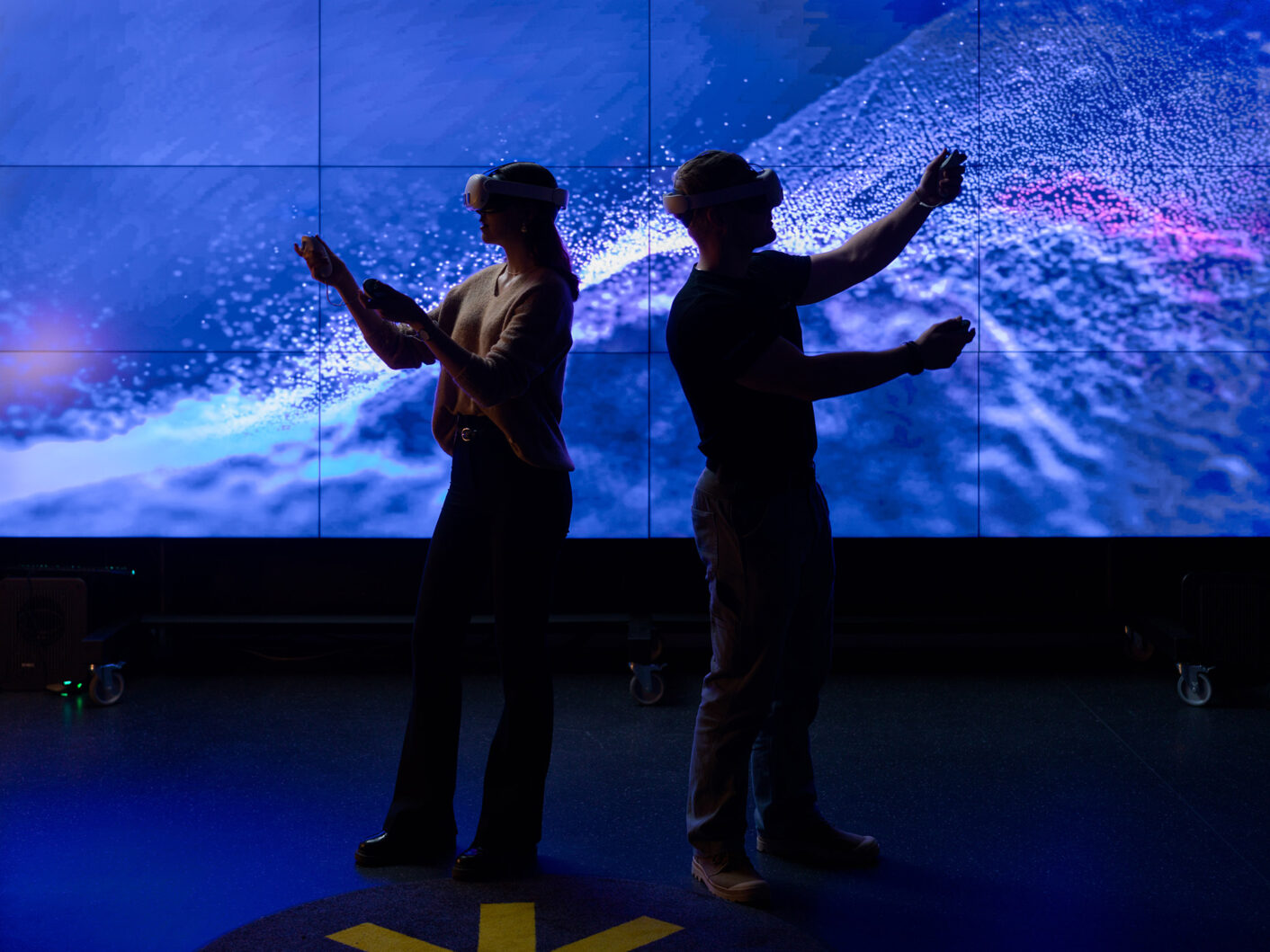
The faculty of ICT and Industrial Engineering integrates autonomous systems, cyber and hybrid resilience, trustworthy AI, XR technology, metaverse, industrial network management, and human‑performance analytics into a unified innovation ecosystem. This enables rapid development, validation, and deployment of dual‑use capabilities for high‑tech industries and defense.
Our faculty has four schools, seven research groups, and four laboratories. Together, we’re a unit of over 2,800 top experts who are driven to find new solutions for the world’s wicked problems.
autonomous systems
cyber and hybrid resilience
trustworthy AI
metaverse
industrial management
human‑performance analytics
Key figures
The Faculty of ICT and Industrial Engineering*
- over 2,670 students
- over 400 new graduates
- over 120 staff members
- 4 schools
- 7 research groups and 4 laboratories
*Figures from 2025
The schools and study opportunities
Our 2,600 students are spread across four different schools. Every year, our study programs produce nearly 400 bachelor’s and master’s degree engineers and business graduates ready to hit the ground.
Data Engineering and AI technologies
The School of Data Engineering and AI technologies (DAIT) has over 410 students enrolled in both bachelor’s and master’s degree programs.
Bachelor’s Degree (B.Eng or BBA)
After completing the first year common studies, the students will apply to continue their studies on one of the following competence tracks:
- Data Engineering and AI
- Health Technology
Master’s Degree (M.Eng or MBA)
Industrial Engineering and Common studies
The School of Industrial Engineering and Common studies (IECS) is the largest school in our faculty in terms of student numbers, with over 1,360 students.
Bachelor’s Degree (B.Eng)
Master’s Degree (M.Eng or MBA)
Networked Systems and Security
The School of Networked Systems and Security (NSS) has over 430 students enrolled in both bachelor’s and master’s degree programs.
Bachelor’s Degree (B.Eng or BBA)
After completing the first year common studies, the students will apply to continue their studies on one of the following competence tracks:
- Data Networks and Cyber Security
- Cyber Security Special Track
- Embedded Software and IoT
Master’s Degree (M.Eng or MBA)
Software and Interactive technologies
The School of Software and interactive technologies (SAIT) has over 435 students enrolled in both bachelor’s and master’s degree programs.
Bachelor’s Degree (B.Eng or BBA)
After completing the first year common studies, the students will apply to continue their studies on one of the following competence tracks:
- Software Engineering and Project Management
- Software Development and Information Systems
- Game and Interactive Technologies
Master’s Degree (M.Eng or MBA)

USVA is one example of our projects
that enhance shared situational awareness
and speed up responses to emerging risks.
Core research capabilities
Our faculty brings together seven specialized research groups that drive applied research with tangible real‑world impact. The research groups are advancing safer digital systems, smarter autonomous technologies, more resilient industrial networks, and human‑centered AI solutions.
Research Groups
Autonomous and Intelligent Systems
Developing and testing autonomous technologies across maritime, land and air domains
Cyber and Hybrid Resilience
Focusing on cybersecurity and cyber- and hybrid threats to evolving challenges
Futuristic Interactive Technologies
Building solution ideas based on versatile dual-use technologies
Industrial Management
Developing responsible management of B2B companies and business networks
Knowledge Management for Human Performance
Developing knowledge management by leveraging artificial intelligence, data analytics and software development
Why partner
with us?
We work with both large and small actors. The aim behind every cooperation is to create mutual benefit through knowledge sharing and innovation.
Our areas of strength
1
Proven ability to deliver dual‑use solutions across autonomy, cybersecurity, XR, AI and industrial ecosystems.
2
Collaboration model blending engineering, human sciences and regulatory expertise.
3
The strength of applied research lies in its speed.
We have the ability to rapidly put research into practice and scale up applications and services that benefit entire society.
Unique test and validation infrastructure
We offer a unique combination of real operational testbeds, compliance‑ready labs, and applied research capacity.




Contact
The Schools | Heads of Education and Research
- Data Engineering and AI: Elina Kontio
- Industrial Engineering and Common Studies: Paula Steinby
- Networked Systems and Security: Jarkko Paavola
- Software and interactive technologies: Mika Luimula
Research Group Leaders
- Autonomous and Intelligent Systems: Juha Kalliovaara
- Cyber and Hybrid Resilience: Päivi Mattila
- Cognitive Technologies: David Oliva
- Futuristic Interactive Technologies: Karri Mikkonen
- Industrial Management: Teppo Neuvonen
- INSIGHT: Eero Lehtonen
- KM4HP: Mikko Pohjola